

Bullpadel K2 Power 2025
A soft diamond that brings easy lift and real intent to overheads, though its high balance asks you to be early on defense.
Our Take
Shape
Diamond
Weight
360 - 370 gr
Touch
Soft
Core
SoftEVA
Faces
PolyGlass
Frame
CarbonTube
What we like
- Easy defensive lob depth
- Stable punch volleys at net
- Comfortable overhead ball exit
What we don't
- High balance slows defense
- Tight high sweet spot
- Less crisp short-angle feedback


Updated on 26 Oct (shipping cost not calculated)
Are you a store owner? Join our platform to be featured here.
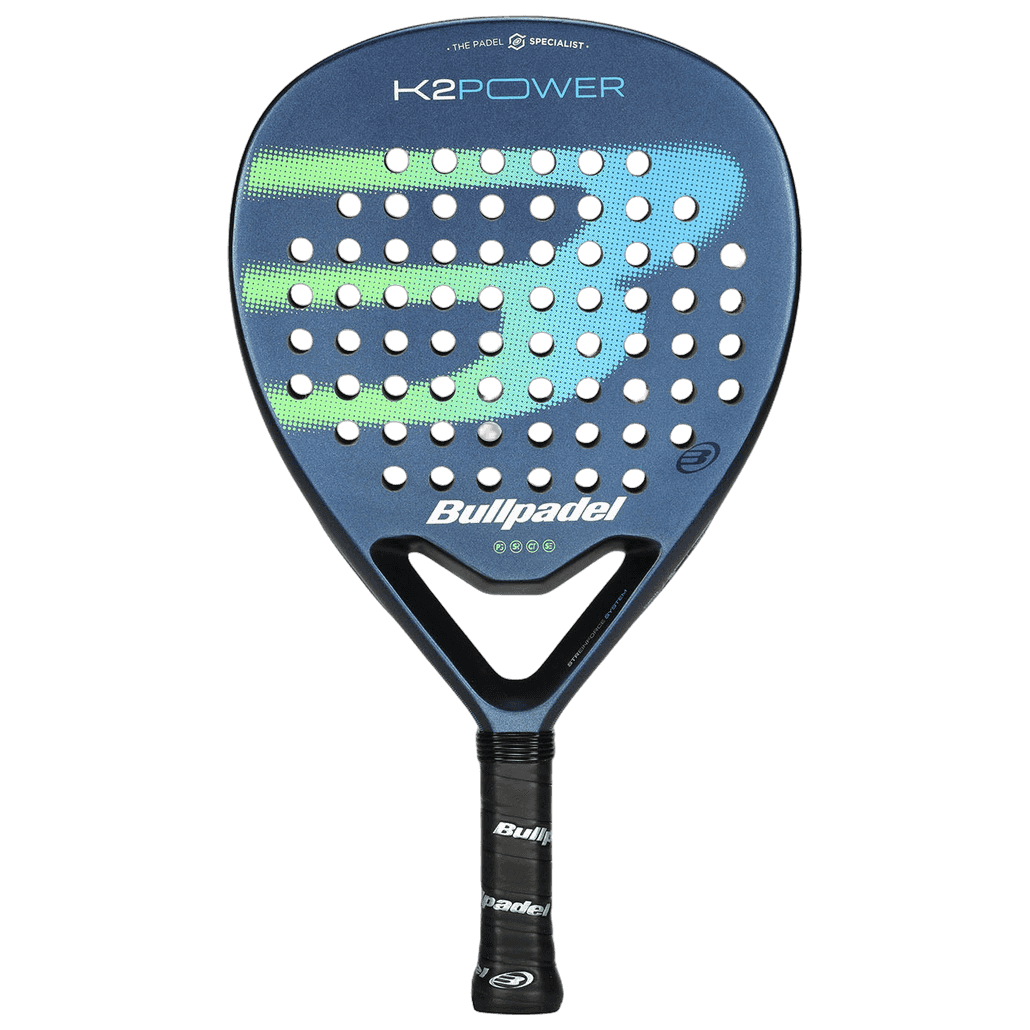
Bullpadel K2 Power 2025 is a forgiving attacking racket with a clear preference for overheads and firm volleys. It brings easy ball exit to a power-oriented profile, but its high balance still asks me to prepare early.
I see it as a transition racket for players who want more presence at the net without jumping straight into a hard, unforgiving carbon model.
Technical analysis
Shape & balance
The diamond shape and high balance put mass toward the top of the racket. That gives me useful leverage through the ball on attacking volleys, bandejas, and smashes. Once the swing is moving, the K2 Power carries the ball well and feels stable rather than twitchy.
That same setup is less friendly when the ball arrives late or low. Quick defensive reactions, blocks at the feet, and rushed off-the-wall shots require more work from my wrist and forearm. The sweet spot also sits fairly high and is not especially broad, so clean preparation matters.
Materials & construction
Bullpadel uses a CarbonTube frame, PolyGlass faces, and a SoftEVA core. It is an interesting mix: the frame gives the racket enough structure to stay composed on firmer contact, while the fiberglass faces and softer core take away much of the harshness I would expect from a diamond racket.
The result is a soft feel with generous rebound. The ball comes off the face easily, especially when I am defending under pressure or trying to find depth without a full swing. What it does not provide is the dry, crisp response of a stiff carbon face. Players who rely on very precise feedback for drops and short angles may find it a little too elastic.
On-court feel
Baseline play
From the baseline, the K2 Power helps on defensive lobs and medium-paced balls because it produces depth without needing a huge stroke. That soft response can make difficult contact more manageable, particularly on balls that reach the racket slightly off center.
Still, it is not a naturally agile defensive racket. On fast exchanges, I have to get the racket set early; otherwise, its head-heavy feel arrives late. Low blocks and compact counterattacks are less reliable than they would be with a round or lower-balanced racket.
At the net
At the net, there is a satisfying amount of stability behind the volley. I can punch through the ball without the frame feeling unstable, and the easy rebound helps when I want to accelerate a volley from a shorter preparation.
Fine touch is more mixed. A soft block volley is available, but the higher balance makes rapid changes between forehand and backhand slower than I would like. It rewards a committed volley more than a delicate chiquita.
Bandeja and víbora
This is where its design makes the most sense. The elevated balance gives my víbora more weight through the court, while the soft construction keeps the impact comfortable when I am repeating overheads over a long match. It does not need perfect contact to send a useful ball back deep.
For a hard finishing smash, there is accessible help from the racket, but not the explosive final gear of a stiff 12K or 18K carbon model. It favors easier acceleration and comfort over a brutally crisp finish.
Conclusion
I would choose the K2 Power 2025 as an intermediate player moving toward a more attacking game, especially if I want help on overheads and volleys without a punishing impact.
The trade-off is clear: it gives easy output and useful power, but demands earlier preparation than its soft touch might suggest. Players who spend most of the match defending, blocking low balls, or relying on quick hand speed should look for a more maneuverable, lower-balanced racket.
What other reviewers say
- PadelTestLaben
The review finds notably easy ball output and strong finishing power on smashes, bandejas and víboras, with a comparatively comfortable impact for a diamond racket. The trade-off is that its high balance demands early preparation and makes quick defense, low blocked volleys and precision control less effective.
- Padel Tennis Racketsen
The author describes a solid racket that rewards committed attacking strokes—especially smashes and explosive volleys—without feeling as harsh as stiffer carbon alternatives. Its fibreglass face improves comfort and helps on mishits, but the smaller sweet spot and diamond shape make it less suitable for defense or inconsistent technique.
- padelblendde
This assessment positions it as a transition racket for moving into attacking play: the high balance and diamond shape provide leverage on overheads, while the soft core and fibreglass face soften some of the punishment from imperfect contact. It does not, however, deliver the crisp, hard finishing response of a stiff carbon racket.
- Racketguidees
The limited owner feedback is mixed: one advanced player calls it soft, with good touch and balance, but low power. Another owner with elbow synovitis says it aggravates his symptoms—an individual experience that contrasts with the comfort-focused conclusions of other reviews.
Switch Intelligence
Be the first to share where you switched from.
Community reviews
Real feedback from players who used this racket.
Add your review
To submit your review, log in first. You can still read all approved community reviews below.
Add review


