

Softee Rebounce Orange 2026
A soft teardrop built around a broad, lively sweet spot, keeping the ball moving freely while control anchors the point.
Our Take
Shape
Tear
Weight
355 - 370 gr
Touch
Soft
Core
Black EVA Professional Soft
Faces
Jacquard carbon
Frame
100% carbon
What we like
- Generous sweet spot on blocks
- Easy defensive lob depth
- Quick handling in volley exchanges
What we don't
- Limited smash punch
- Muted feedback on touch shots
- Less bite on fast víboras
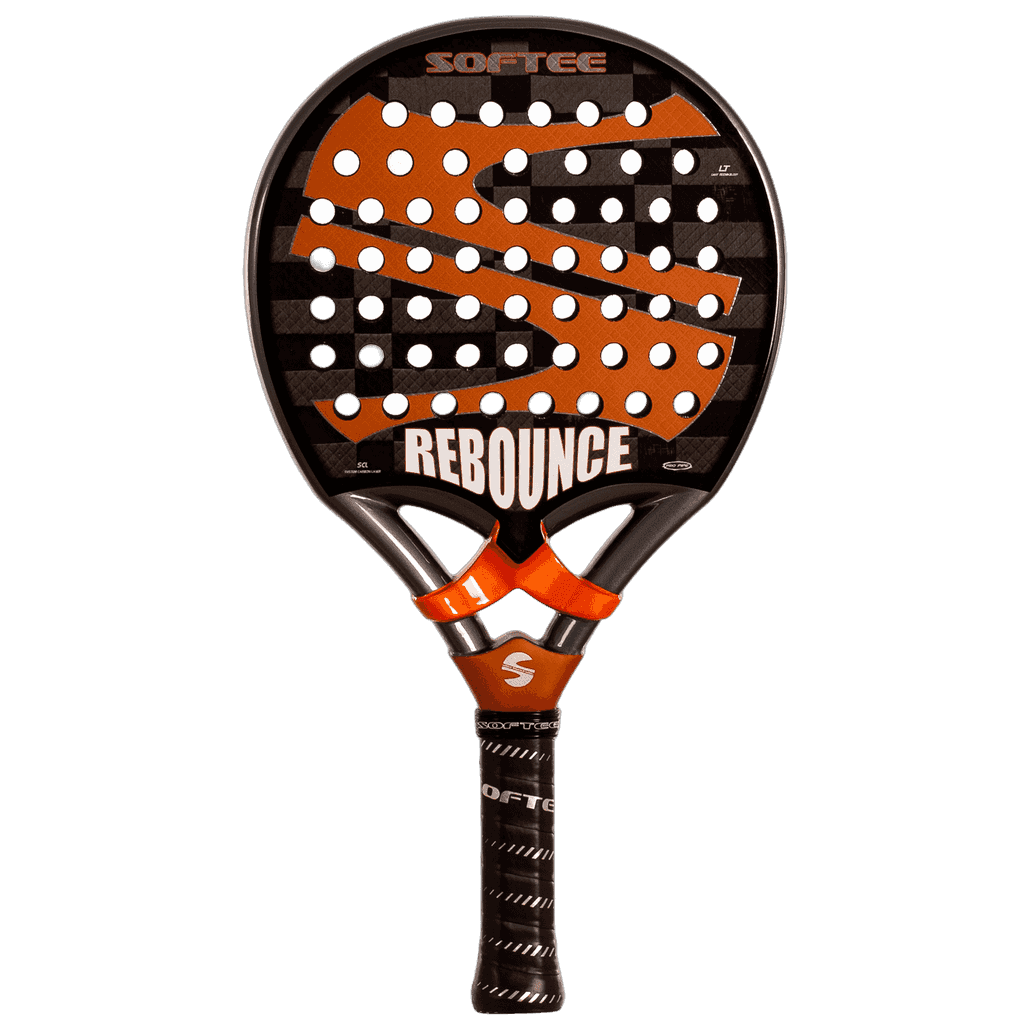
Softee Rebounce Orange 2026 is a comfort-first tear-shaped racket that leans toward easy depth, a large working area, and a forgiving response rather than raw finishing power. Its soft feel is the main story: the ball comes off the face quickly without demanding a full swing.
I see it fitting an intermediate player who builds points from the baseline, values defensive consistency, and wants help when contact is not quite clean. It is not a racket for forcing every overhead or overpowering the net.
The tear shape gives it a useful middle ground. There is enough support higher in the face for attacking shots, but it does not carry the demanding, head-heavy character of a true diamond racket.
Technical analysis
Shape & balance
The tear format and moderate balance make the Rebounce Orange easy to move through the hitting zone. I found that particularly useful in quick exchanges, where getting the racket into position matters more than producing maximum racket-head speed.
Its very generous sweet spot should be one of its strongest assets. Miss the center slightly on a block or an off-the-wall return and the response should remain fairly stable, rather than dying immediately off the face. That forgiveness comes with a trade-off: the racket does not feel especially sharp or explosive at the top of the face.
Materials & construction
The 100% carbon frame gives the structure enough firmness to stop the racket from feeling loose or overly bouncy. On the faces, Carbon Jacquard should add a more controlled, cleaner contact than a fiberglass-faced soft racket, though this is still a comfort-oriented build rather than a hard, direct one.
The Black EVA Profesional Soft core is responsible for most of the racket’s accessible ball exit. It helps on compact swings and defensive shots, especially when I need depth without taking a big cut at the ball. Players who prefer a dry, crisp impact may find it too muted. The feedback is more cushioned than surgical.
On-court feel
Baseline play
From the baseline, this is where the Rebounce Orange makes the most sense. The soft core helps absorb pace on blocks, while the broad sweet spot gives some margin on balls taken late or low after the glass. Defensive lobs come off with less effort than they do from firmer carbon rackets.
I would not expect pinpoint feedback on every touch shot, though. On a low-driven lob or a very delicate chiquita, the ball can leave the face a little faster than intended until I adjust my hand pressure. It rewards a relaxed grip, not a forced one.
At the net
At the net, the maneuverability helps in fast volley exchanges. The racket gets around quickly, and the softer response takes some sting out of hard body shots. I liked that kind of behavior for directing blocks and placing volleys into space rather than trying to hit through opponents.
What it does not do as well is produce a heavy, penetrating volley from a short punch. To make the ball travel with real authority, I need to accelerate properly and hit cleanly. The racket supplies easy exit, but not much free weight behind the ball.
Bandeja and víbora
The softer touch works well for a controlled bandeja, particularly when the goal is depth and low bounce rather than outright pace. A víbora is possible, but players who generate a lot of wrist speed may want a firmer face with more direct feedback and bite.
Conclusion
I would look at the Rebounce Orange if my game relies on consistency, comfortable defense, and keeping the ball deep without overhitting. It should suit intermediate players especially well, including those moving away from an entry-level fiberglass racket but not ready for a demanding hard-carbon model.
The trade-off is clear. You gain forgiveness, maneuverability, and easy ball exit, but give up some punch on the smash and some precision for aggressive spin-heavy overheads.
Switch Intelligence
Be the first to share where you switched from.
Community reviews
Real feedback from players who used this racket.
Add your review
To submit your review, log in first. You can still read all approved community reviews below.
Add review


