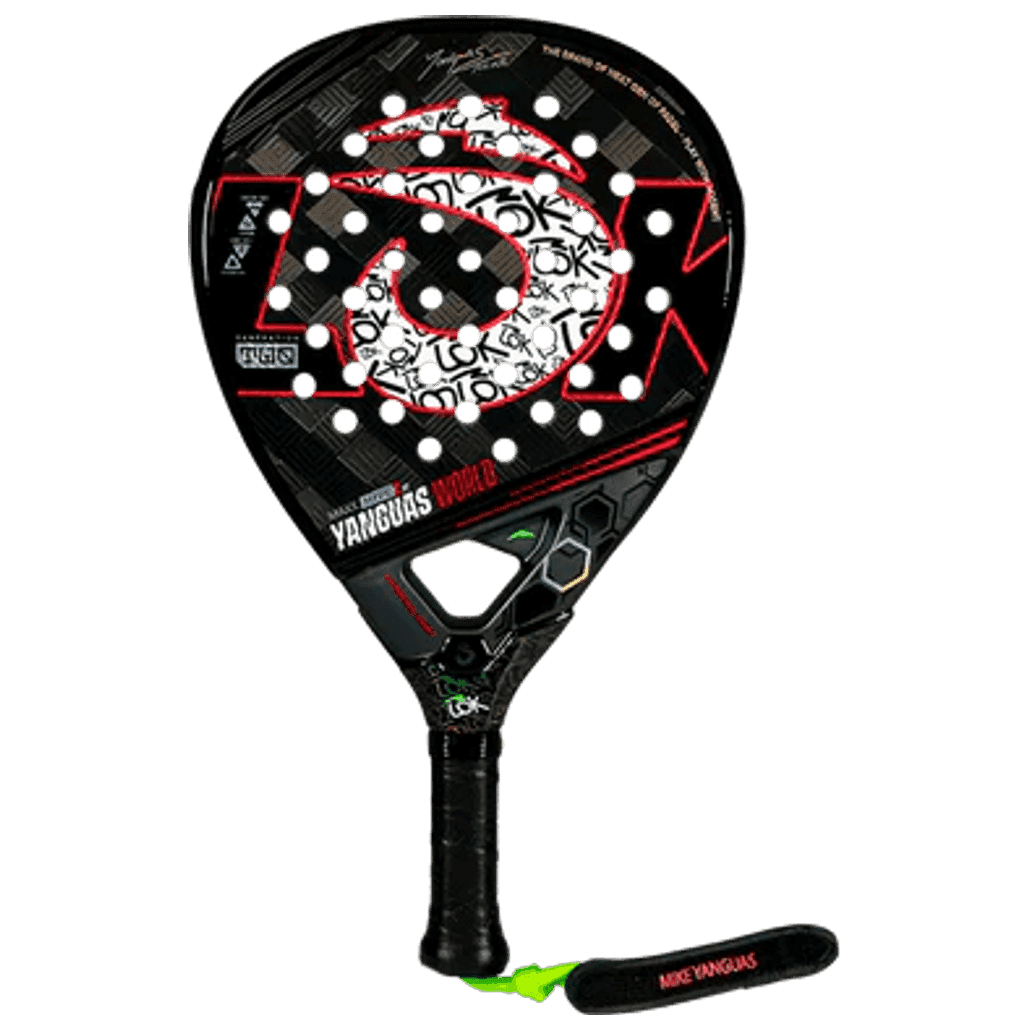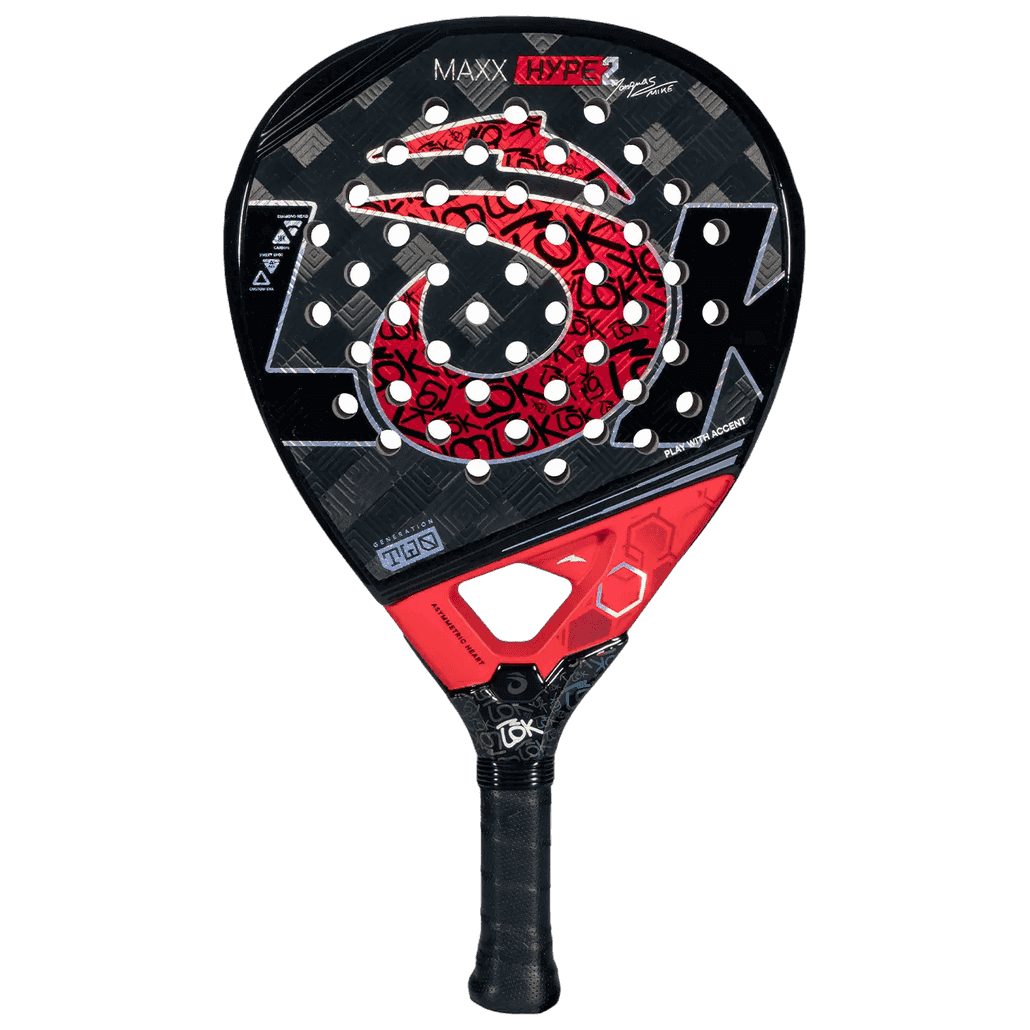
Lok Maxx Hype Gen 2 2026 Mike Yanguas
An attacking diamond with real bite, yet enough sweet spot and composure to keep the back court from feeling like a liability.
Shape
Diamond
Weight
360 - 375 gr
Touch
Medium-Hard
Core
EVA
Faces
C18 carbon fiber
Frame
Carbon fiber
What we like
- Workable diamond handling
- Confident *bandeja* and *víbora*
- Heavy, stable smash output
What we don't
- Late defense gets exposed
- Needs clean, early contact
- Firm feel lacks comfort



Updated on 17 Jul (shipping cost not calculated)
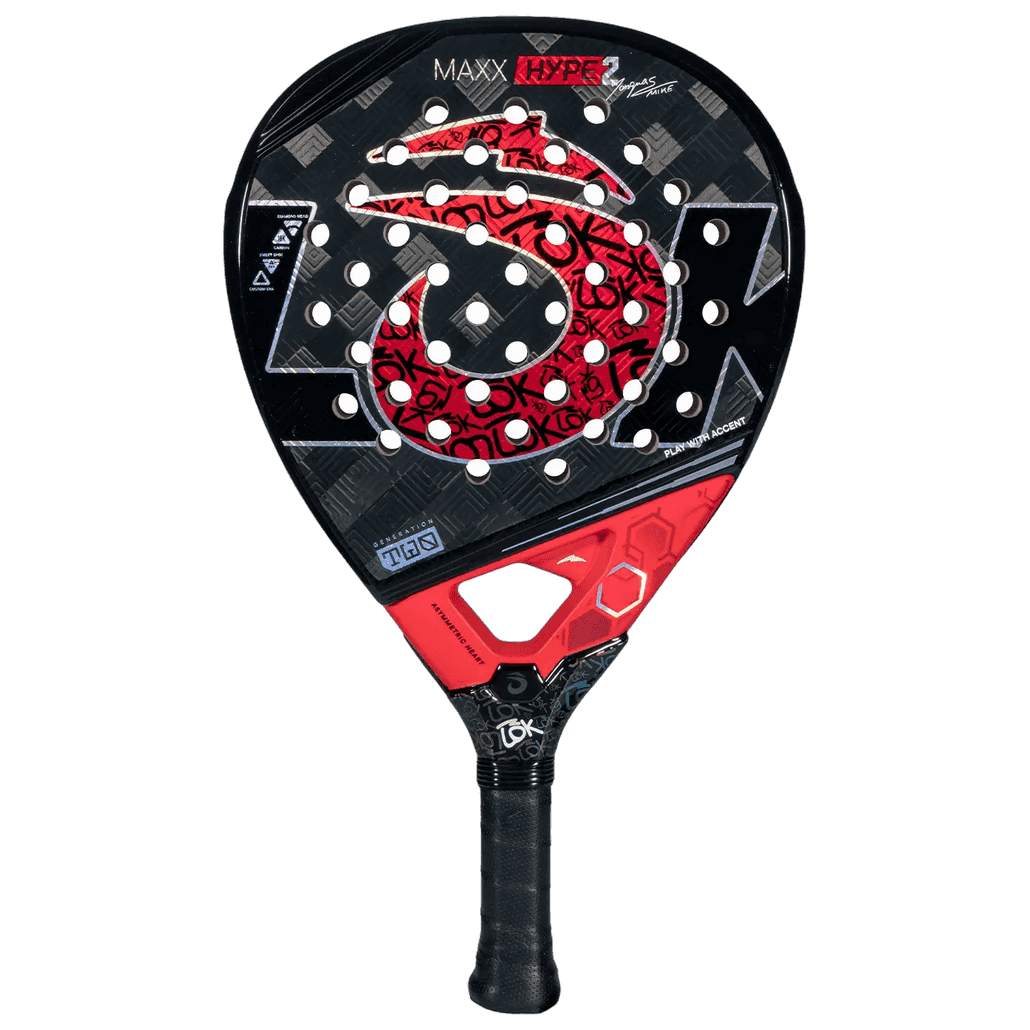
Lok Maxx Hype Gen 2 2026 Mike Yanguas is a diamond-shaped attacking racket with more margin than I expected from the frame. It wants to finish points, but it doesn’t feel like a one-trick hammer.
I read it as a serious option for players who like to take the net, hit with intent, and still keep enough order from the back of the court. The feel is medium-hard, so it gives feedback. It also asks for clean contact. If you arrive late, it tells you.
Technical analysis
Shape & balance
The diamond shape sets the tone straight away. This is not a low-slung control racket pretending to be offensive. The balance sits where I want it for attacking overheads, and that helps on the shots that matter most in this profile: bandeja, víbora, and the finishing smash.
What I like is that the handling is better than the shape suggests. It is still an aggressive racket, but it doesn’t swing like a club. That extra manageability makes a difference when you have to react fast at the net or reset the point under pressure.
Materials & construction
The frame in carbon fiber, the faces in C18 carbon fiber, and the EVA core give it a crisp, fairly firm response. The first feel is direct rather than elastic. Ball exit is good, but it doesn’t hand you free depth the way softer rackets do.
That construction also explains the stability I felt on contact. The sweet spot is wider than I usually expect from a diamond racket, which helps a lot in real matches. You still need to hit cleanly, though. Off-center contact is playable, not magical.
On-court feel
Baseline play
From the baseline, the racket is more usable than its shape alone would suggest. Defensive lobs come off with enough depth if I set the contact early, and blocks hold up well when the pace is high. I wouldn’t call it forgiving, but it is not punishing in the way some pure attack rackets are.
Where it asks questions is on passive defense. If I’m late, the response can feel a bit heavy and the ball doesn’t simply escape by itself. You have to prepare early and keep the swing short. That’s the trade-off for the power on offer.
At the net
This is where the racket makes the most sense. Volleys carry weight, and the face response lets me press without overhitting. It feels quick enough for first volleys and firm enough to keep the ball low and uncomfortable.
I also found it friendlier than many diamond rackets when I had to volley in awkward body positions. There’s still a firm, medium-hard sensation, but the racket doesn’t feel like it’s fighting me every time I shorten the stroke.
Bandeja and víbora
These are probably the best shots in the package. The racket helps me accelerate through the ball without losing direction, and the sweet spot gives a bit more confidence than I expected on imperfect contact. The result is a useful mix of pace and control.
On both shots, I could feel the racket rewarding proper preparation. If I got behind the ball early, the bite was there. If I rushed, it stayed playable but lost some of that easy penetration.
Smash
This is the clear selling point. The racket has real punch on flat smashes and aggressive overhead finishes, and it carries enough stability to let me commit fully. When the contact is clean, the ball comes off with serious intent.
That said, it is not a lazy power racket. The smash is there, but the racket still wants timing and mechanics. If your overhead is messy, it won’t hide it.
Conclusion
I’d put this racket in the hands of players who like to attack, especially those who spend a lot of time at the net and want a diamond shape that still feels workable. It gives you power, a respectable sweet spot, and enough control to build points instead of just swinging for the fences.
What you give up is comfort and forgiveness under stress. Deep defense takes more work, and late contact gets exposed. If you like a softer, easier response, this one will probably feel too direct.
What other reviewers say
- Padel Racket Reviewsen
The racket is portrayed as an attack-oriented diamond with a larger-than-usual sweet spot and better handling than many aggressive diamonds. It shines on bandejas, víboras, and smashes, but it demands clean technique and punishes late or passive defense.
- Padelvoen
It is presented as an offensive racket built to dominate at the net and finish points quickly without completely sacrificing defensive control. The dominant impression is a medium-hard feel: it delivers plenty of power, but it asks for good preparation and quick reactions from the back court.
- Reddit r/Padelracketen
A user says they tried the racket and their tennis elbow did not hurt, suggesting it felt friendlier on the arm than expected. The comment is short, but it points to a comfortable, non-painful first experience with this specific racket.
Switch Intelligence
Be the first to share where you switched from.
Community reviews
Real feedback from players who used this racket.
3 reviews

One of the best rackets I had, good balance between power and control. Very good touch/feel if hit well in the sweetspot. Unfortunately some durability issues (cracked on a flat smash).


Add your review
To submit your review, log in first. You can still read all approved community reviews below.
Add review