

Lok Jungle 2026
A diamond-frame attacker with fast ball exit, firm response, and enough stability to stay composed when the point gets messy.
Our Take
Shape
Diamond
Weight
360 - 375 gr
Touch
Medium-Hard
Core
EVA
Faces
C18 carbon fiber
Frame
Carbon fiber
What we like
- Heavy overhead power
- Stable, lively ball exit
- Strong spin on *bandeja*
What we don't
- Compact sweet spot
- Less nimble in defense
- Punishes off-center contact



Updated on 26 Oct (shipping cost not calculated)
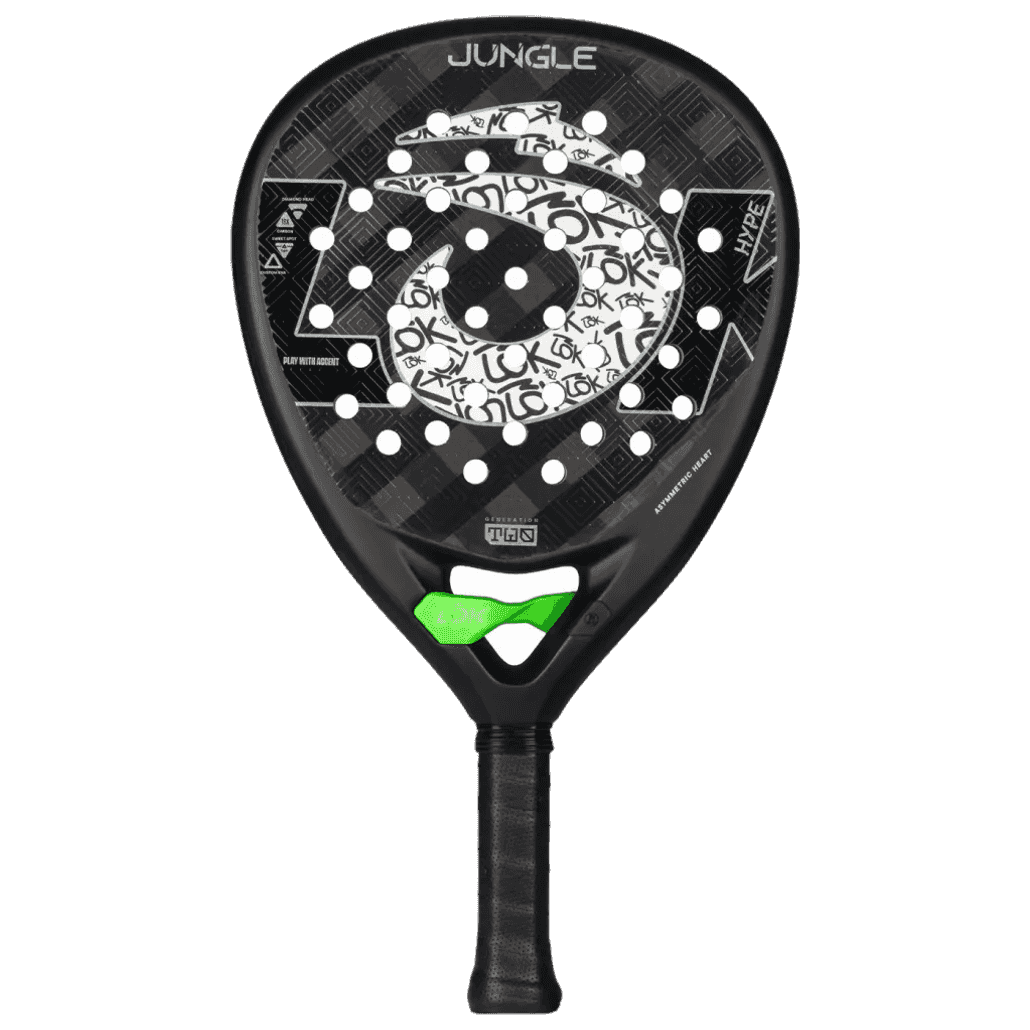
The Lok Jungle 2026 is an attacking racket with a firm personality and very little interest in hiding it. It wants pace, it rewards clean timing, and it turns a fast swing into heavy ball output without feeling floppy.
I read it as a racket for players who like to take over the point from the backcourt and do real damage up top. It has enough comfort for its class, but this is still a demanding, head-heavy diamond shape that asks for good mechanics.
Technical analysis
Shape & balance
The Diamond shape and high balance are doing most of the talking here. In my hands, the Jungle 2026 feels built to load the ball in attacking situations, especially once I get it moving. It naturally lends itself to overheads, aggressive volleys, and any shot where I can use the racket’s inertia instead of fighting it.
That comes with a trade-off. Quick defensive exchanges are not where it feels happiest. I had to stay sharp on blocks and react early at the net, because the racket does not give me the same hand speed or ease as a more neutral mold. If your timing is late, it will show.
Materials & construction
The fibra de carbono frame and fibra de carbono C18 faces give this racket a firm, direct response. The feel is Medium-Hard, and that lines up with what I get on court: a crisp contact, lively ball exit, and a clear sense of where the ball is coming off the face. The EVA core helps keep things from feeling dead, but this is still a serious contact point rather than a plush one.
What I appreciate is that the racket stays fairly stable for an offensive model. It does not wobble much when I catch the ball cleanly, and it carries decent bite on impact. The sweet spot is not tiny, but it is compact enough that I need to stay honest with my technique. Off-center hits lose quality fast.
On-court feel
Baseline play
From the baseline, the Jungle 2026 gives me a lot when I strike through the ball with intent. Defensive lobs come off with good depth, and there is enough response to reset a point without feeling trapped. I also liked how it handled low-driven lobs when I needed to change the rhythm.
Still, this is not a racket that smooths over mistakes. If I get rushed or contact drifts toward the frame, the ball comes out flatter and the comfort drops. It rewards prep and timing more than panic-saving.
At the net
This is where the racket makes the most sense to me. Volleys carry real weight, and I can put pressure on opponents without needing to swing wildly. The response is quick enough to keep the exchange alive, but the racket has enough mass in the head to make the ball feel heavier than it looks.
On fast hands exchanges, though, I notice the limits. It is stable, yes, but not especially nimble. If I want to block and reset under pressure, I need clean positioning. If I get lazy, it punishes that immediately.
Bandeja and víbora
These shots fit the Jungle 2026 nicely. The racket gives me good access to spin, and the firm face helps the ball grip before release. My bandeja feels purposeful with this racket: I can direct it deep and keep the pace awkward for the rivals.
The víbora is probably the more natural fit of the two. I get a sharp, controlled path through the ball, and the racket helps me add bite without losing too much direction. It is not effortless, though. I still need to create the action myself.
Smash
This is the racket’s loudest argument. On smash contact, it feels explosive and very easy to accelerate into power once I catch it properly. That high balance really shows here, especially on overheads where I want free pace and a heavy finish.
The catch is obvious: it demands clean contact. When I strike off-center, the reward drops fast and the racket stops feeling so friendly. If your overhead timing is solid, it can be a nasty tool. If not, it will tell you.
Conclusion
I see the Lok Jungle 2026 as a serious attacking racket for players who already own their swing. It brings heavy overhead power, strong volley punch, and enough stability to feel credible in fast rallies.
What you trade off is maneuverability and forgiveness. The sweet spot is not huge, and the racket does not help much if your technique is messy or your reactions are late. For advanced players who want a firm, aggressive diamond with real bite, though, it makes a lot of sense.
What other reviewers say
- Padel Tennis Racketsen
The Jungle 2026 is portrayed as an aggressive racket that turns swing speed into easy power, with a high balance and medium-hard feel. The review says it shines on overheads and attacking play, but it asks for clean technique and punishes off-center contact.
- PadelScouten
The review frames it as an offensive tool for advanced or pro players who want extra pace from the backcourt without giving up all maneuverability. It highlights the diamond shape and high balance as rewards for players who create their own acceleration and time the ball well.
- Padelreferencefr
The expert notes describe it as a powerful, lively racket with good stability and explosive ball output in attacking situations. They also emphasize that it brings unusual tolerance and comfort for an attacking model, with spin being a notable plus.
Switch Intelligence
Be the first to share where you switched from.
Community reviews
Real feedback from players who used this racket.
Add your review
To submit your review, log in first. You can still read all approved community reviews below.
Add review


