

Joma Blast Pro HRD 2026
A firm teardrop built for decisive volleys and clean blocks, with enough agility to stay composed when the point turns defensive.
Our Take
Shape
Tear
Weight
355 - 365 gr
Touch
Medium-Hard
Core
Black EVA HRD
Faces
12K Carbon
Frame
Dual Tech Frame
What we like
- Assertive attacking volleys
- Controlled blocks against pace
- Maneuverable baseline defensive preparation
What we don't
- Limited free defensive depth
- Small sweet spot on overheads
- Blunt touch on drop shots


Updated on 15 Oct (shipping cost not calculated)
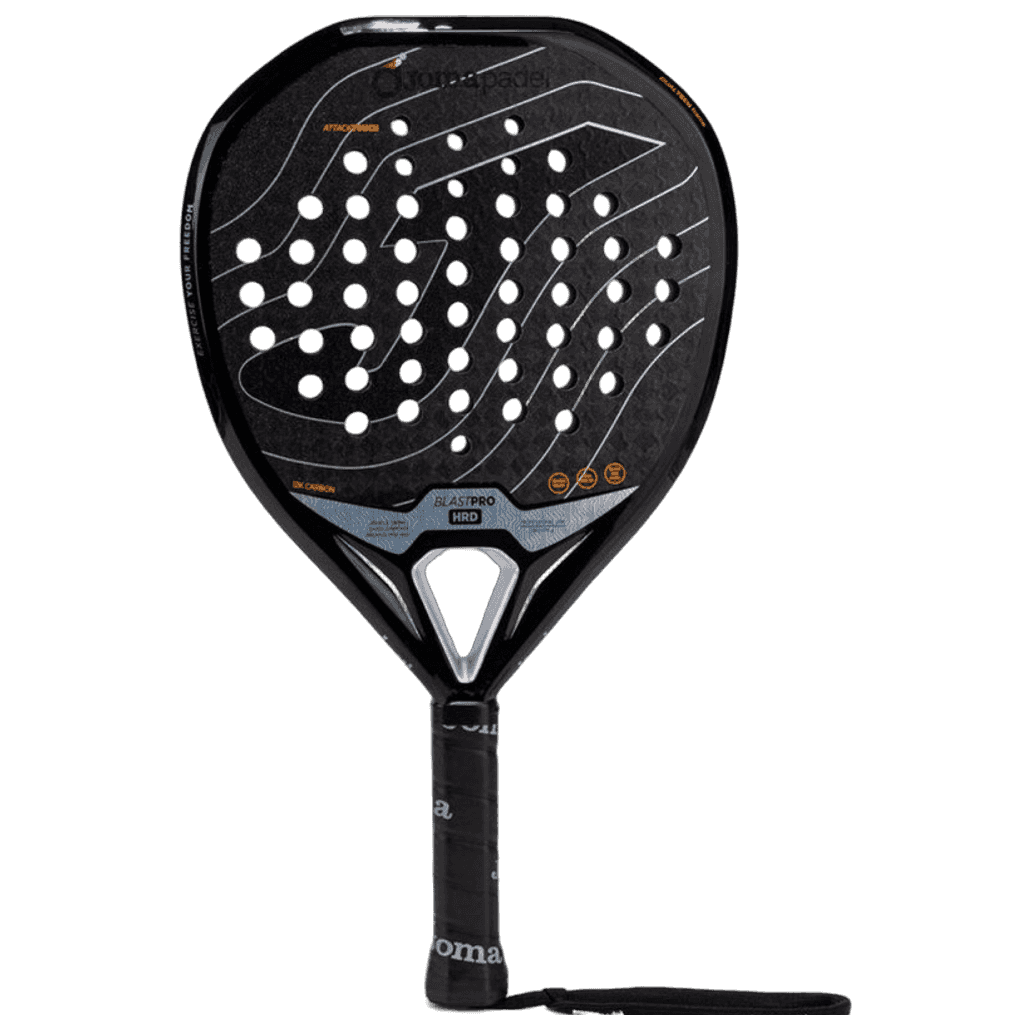
The Joma Blast Pro HRD 2026 is an attack-leaning racket with a firmer, more deliberate response than its tear shape might suggest. It wants an active player behind it: someone who can generate racket-head speed and likes taking control once the point moves forward.
It is not a forgiving, automatic-power racket. The payoff comes when you hit cleanly and commit to the shot.
Technical analysis
Shape & balance
The tear shape gives the Blast Pro HRD a more usable middle ground than a full diamond racket. Its balance feels geared toward attacking volleys and overheads, but it should still move quickly enough through defensive preparation at the baseline. That matches early player feedback: one user found it notably maneuverable from the back court despite its offensive intent.
The sweet spot is not huge, though. With a 7.2 sweet-spot rating, I would expect clean contact to matter, particularly above the head. If your overhead timing is inconsistent, this racket is unlikely to hide that. Miss slightly high or toward the sides and the response will feel less stable and less productive than its power-oriented profile suggests.
Materials & construction
Joma pairs a Dual Tech Frame with 12K carbon faces and a Black EVA HRD core. The result is a medium-hard feel: firm at impact, reasonably direct, and less springy than a soft EVA construction.
That firmer layup should suit players who generate their own pace rather than rely on free ball exit. The core does not appear to give much free rebound on slow defensive contacts, so it asks for a positive swing on deep balls. On the other hand, the direct response should make it easier to keep volleys low and controlled when the pace rises.
On-court feel
Baseline play
From the baseline, I would expect the Blast Pro HRD to feel more manageable than a head-heavy diamond model. The tear format helps bring the racket around for defensive lobs, off-the-wall shots, and quicker blocks. Early feedback also points to a useful touch when blocking hard bajadas, which makes sense for a medium-hard racket that does not over-launch the ball.
Still, this is not the racket I would choose for passive defense. Its rebound is limited, and short swings will not always give you easy depth. Against heavy pressure, you need to prepare early and push through the ball rather than simply present the face.
At the net
This is where its character makes the most sense. The Blast Pro HRD should reward compact, assertive volleys, especially when you want to accelerate through the middle or press into the opponent’s feet. A player who tested it in match play specifically liked it on attacking volleys, and that fits the combination of carbon faces and a firm core.
Blocks at the net should also be controlled rather than bouncy. The trade-off is touch on delicate drop shots and very soft chiquitas: the firm face can feel a little blunt unless your hands are relaxed and your contact is clean.
Bandeja and víbora
The racket has enough maneuverability to make a bandeja or víbora practical rather than laborious, but I would not call overhead play its most forgiving area. One early user struggled to consistently find the sweet spot on overheads, and that is worth taking seriously.
Players with repeatable technique can use the firmer response to drive a low, penetrating víbora. Those who frequently contact late or outside the center may find their overheads lose direction and weight.
Conclusion
I see the Blast Pro HRD as a strong fit for intermediate-to-advanced players who like to take the initiative and want a firmer, more attacking racket at the net. It has the tools for aggressive volleys, controlled blocks, and purposeful overheads without becoming unwieldy from the back court.
The trade-off is forgiveness. It does not provide much free depth in defense, and the sweet spot demands better timing on the smash and overheads. If you like a soft, easy-launching racket, this will probably feel too demanding.
What other reviewers say
- r/Padelracket (Reddit)en
After a first match with the Blast Pro HRD 2026, one player found it maneuverable from the back court and especially effective on attacking volleys. They praised its touch for blocking fast bajadas, but struggled somewhat to locate the sweet spot on overheads.
Switch Intelligence
Be the first to share where you switched from.
Community reviews
Real feedback from players who used this racket.
Add your review
To submit your review, log in first. You can still read all approved community reviews below.
Add review


