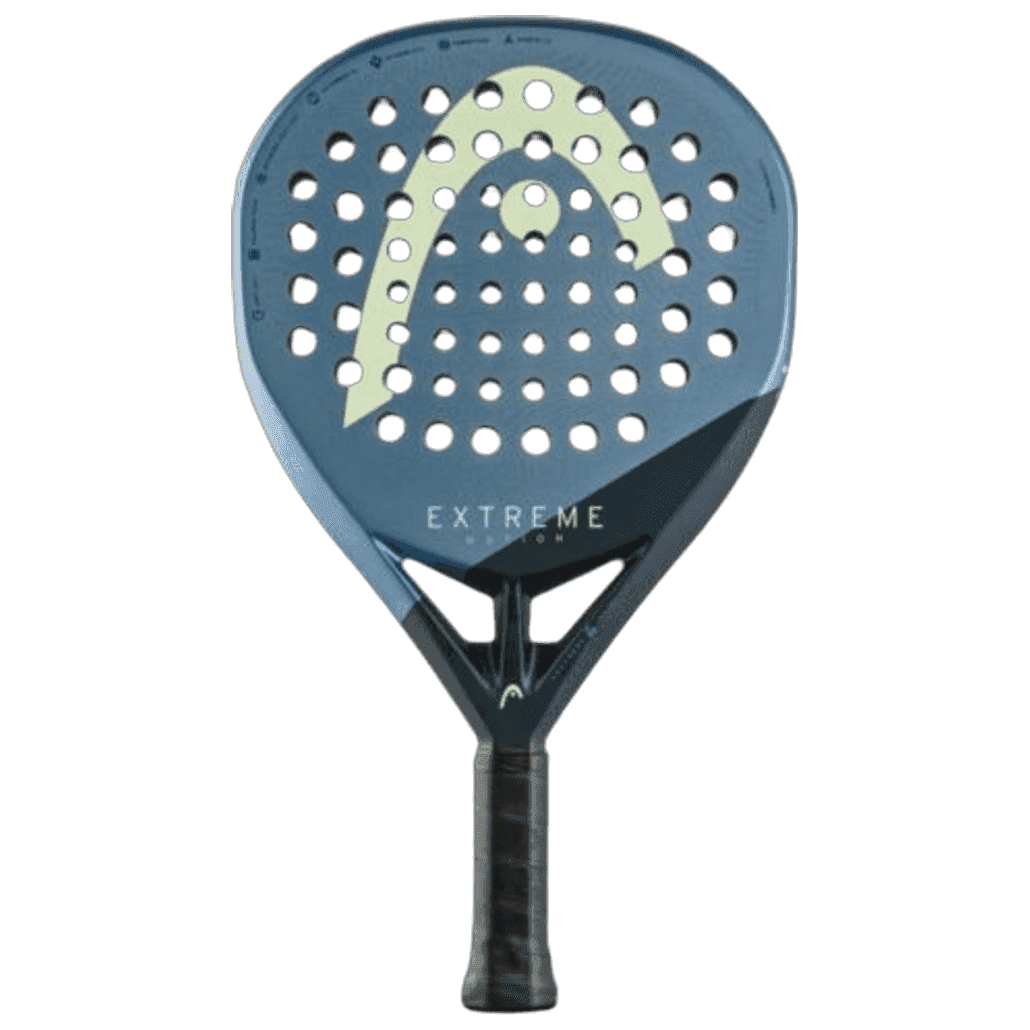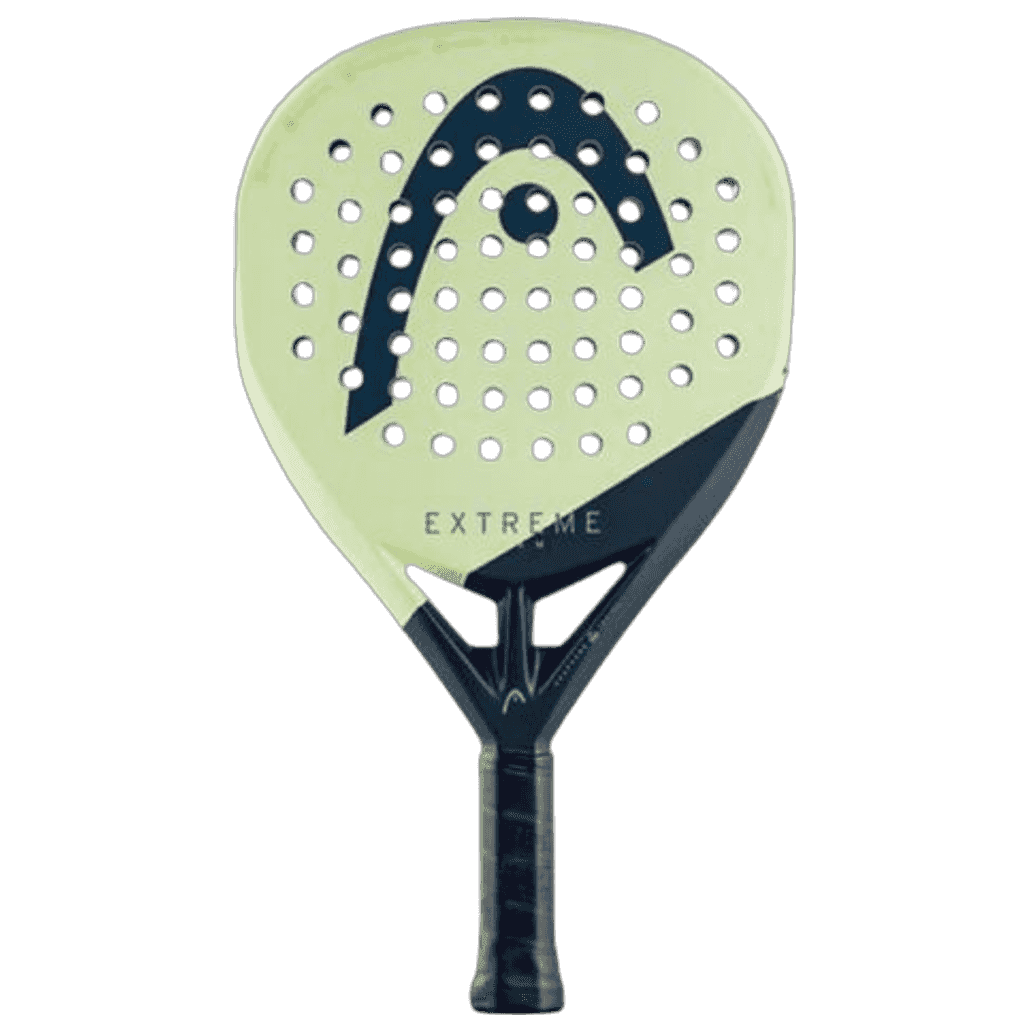
Head Extreme Team 2026
A diamond-frame racket with lively ball exit and a softer touch, giving attacking players easy pace without harshness.
Shape
Diamond
Weight
365 gr
Touch
Medium
Core
Power FOAM
Faces
Fiberglass
Frame
100% Carbon
What we like
- Lively ball exit on contact
- Quick response at the net
- Stable *bandeja* and *víbora*
What we don't
- Defense demands strong preparation
- Needs technique to unlock power
- Less forgiving on late balls
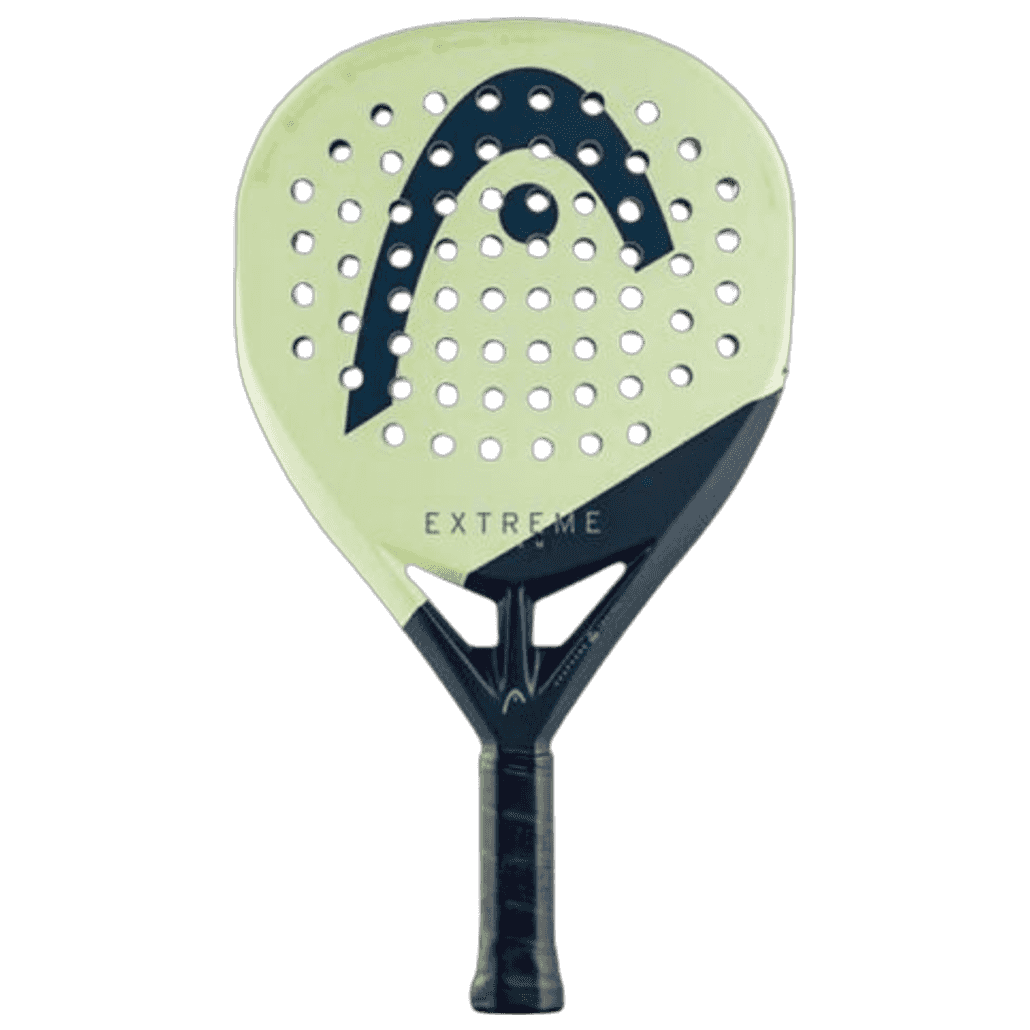
Head Extreme Team 2026 is a power-oriented racket with a softer edge than most of its diamond-shaped rivals. I see it as an attacking frame for players who want lively ball exit and easy access to speed, but without that harsh, punishing feel that some offensive rackets bring.
The character is pretty clear from the first few hits: it likes to work near the net, it rewards an active hand, and it asks for enough technique to get the most out of it. If you play with intent and like to press with your volleys and overheads, it makes sense. If you want a racket that does the heavy lifting in defense, this is not that.
Technical analysis
Shape & balance
The diamond shape and medium-high balance give this racket its attacking bias. There’s a noticeable lever effect on overheads, and that helps when I’m looking to finish points or push opponents back with pressure rather than just place the ball. It feels quick enough in the hand for a power model, but it still carries the weight of a racket that wants to live forward.
That said, the balance is part of the compromise. In reactive defensive exchanges, especially when I’m late to the ball, it doesn’t feel as natural as rounder, more forgiving options. It wants a player who is already comfortable handling pace and managing racket head speed.
Materials & construction
The fiberglass faces are a big part of why this model feels friendlier than many diamond rackets. They soften impact, add comfort, and keep the response from getting too sharp. The 100% Carbono frame gives the structure a cleaner, more stable backbone, so the racket doesn’t fold when I speed up the hands.
The Power FOAM core gives it a lively response without turning it into a trampoline. I get good rebound on clean contact, but the feel stays controlled enough to keep the ball from flying on me too often. It’s a medium feel overall, and that middle ground suits the racket’s personality: accessible power, not a brick-like hit.
On-court feel
Baseline play
From the baseline, this racket is decent rather than dominant. It blocks fine and gives me enough response to get the ball back with depth, but it doesn’t have the effortless defensive comfort of a more control-focused frame. I have to be honest with my preparation here; if I’m lazy with my timing, the ball doesn’t always come off as cleanly as I want.
Where it improves is on aggressive defensive lobs and low-driven lobs. The ball exits quickly enough to help me reset the point, and the racket keeps a lively enough response to stop those shots from feeling dead.
At the net
This is where the racket makes the most sense. Volley speed is easy to access, and the face has enough bite for me to angle the ball and keep pressure on my opponents. It responds quickly in fast exchanges, which matters when the rally speeds up and I need the racket to stay sharp.
It’s also quite useful on chiquita situations and transition balls, because the response is direct. I don’t get much delay between contact and exit. That helps me take time away from the other pair.
Bandeja and víbora
These are probably the shots that show the racket’s best balance of power and comfort. On the bandeja, it feels stable enough to control direction while still sending the ball through with pace. On the víbora, the face gives me enough grip to work spin without fighting the racket.
It does ask for technique, though. I can’t just swing and expect the racket to create everything for me. When my mechanics are good, these shots come off with authority. When they aren’t, the racket tells on me.
Conclusion
The Head Extreme Team 2026 suits players who want an attacking racket with a softer, more usable feel than the usual hard-edged power options. It gives me lively ball exit, quick reactions at the net, and enough comfort to avoid feeling overly punished on contact.
What I don’t get is free defense. It’s not the most forgiving racket in slower, messier exchanges, and it won’t hide technical gaps. For an intermediate-to-advanced player who spends real time at the net and likes to build points with pressure, that trade-off can be worth it.
What other reviewers say
- PadelScouthr
The racket is framed as an attacking option, but friendlier than other power models: the medium-high balance and Power Foam help the ball come off lively without making it harsh. It reacts quickly at net and lets players add spin, though you still need enough technique to unlock its attacking bias.
Switch Intelligence
Be the first to share where you switched from.
Community reviews
Real feedback from players who used this racket.
1 review

Add your review
To submit your review, log in first. You can still read all approved community reviews below.
Add review