

Babolat Technical Veron 3.0 2026
A diamond racket with lively ball exit and enough composure to keep its attacking edge from breaking down under pressure.
Our Take
Shape
Diamond
Weight
350 - 370 gr
Touch
Medium
Core
Black EVA
Faces
Carbon Flex
Frame
100% Carbon
What we like
- Easy ball exit on contact
- Reliable *bandeja* and overheads
- Stable, direct volleys at net
What we don't
- Defense feels slower under pressure
- Late contact gets punished
- Not very quick in hands battles



Updated on 15 Oct (shipping cost not calculated)





Updated on 26 Oct (shipping cost not calculated)
Are you a store owner? Join our platform to be featured here.
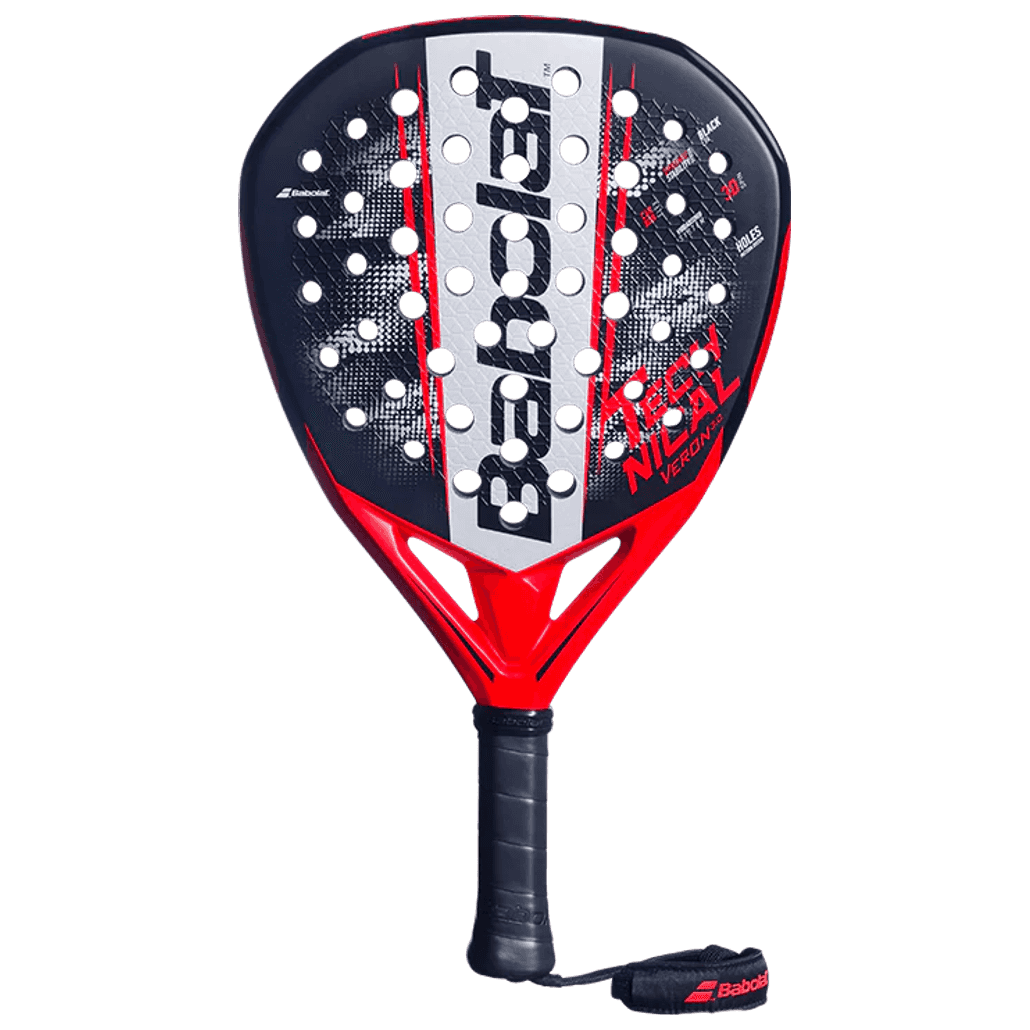
Babolat Technical Veron 3.0 2026 is an attacking racket with a fairly clear personality: it wants to help you finish points without feeling brutally demanding. I’d place it in that middle ground where power is present, but the racket still keeps enough order to work in long rallies.
The diamond shape and the Medium feel give it an offensive bias, yet this is not one of those rackets that only behaves when you swing like a lunatic. It has a more controlled response than its profile suggests, and that matters in real matches.
What I notice most is that it gives easy access to ball exit and a clean response on contact. That said, it still asks for decent timing. If your technique is late or sloppy, it won’t hide everything for you.
Technical analysis
Shape & balance
The diamond shape pushes the sweet spot a bit higher, which fits the racket’s attacking intent. In practice, that means it feels more natural once you get above the shoulder line, especially on overheads and aggressive volleys. The balance supports that behavior without making the frame feel absurdly top-heavy.
I do think this is a racket that rewards an active hand. It is not especially quick in tight exchanges, and it takes a bit more work than a round model when you’re defending under pressure. The upside is a more decisive strike when you step in and take initiative.
Materials & construction
The 100% carbon frame gives the structure a firm base, and the Carbono Flex faces soften the contact enough to keep the racket from feeling too dry. The Black EVA core sits in a medium zone that blends rebound with enough firmness to keep the ball from disappearing off the face.
That combination is the reason this racket feels more forgiving than some pure attacking models. You still get a crisp enough response for offensive play, but there’s enough flex in the faces to give the ball exit a little help. I wouldn’t call it plush, though. If you prefer a very soft, highly elastic feel, this is not that racket.
On-court feel
Baseline play
From the baseline, it behaves better than the shape alone would suggest. Defensive blocks come out clean if your racket preparation is decent, and the medium response helps when you’re looking for a low-driven lob or a controlled reset after the wall.
Still, it’s not a lazy defender’s racket. On awkward balls, especially when you’re stretched or late, the head-oriented balance can remind you that this is built to attack first. The reward is more depth and authority once you find the center.
At the net
This is where it starts to make sense. Volleys come off with a solid, direct feel, and the racket gives you enough bite to pressure opponents without overhitting. I also liked how stable it felt when I was closing the net and redirecting pace.
It’s not the quickest racket for frantic hands battles, but it holds its line well. If you like taking the ball early and keeping the exchange sharp, it gives you a reliable response.
Bandeja and víbora
These shots suit the racket nicely. The shape helps load the overheads, and the face response gives you a good mix of control and penetration. I found the bandeja especially comfortable: easy to place, with enough rebound to keep the ball deep.
The víbora has decent bite too, though it still asks for proper technique to get the most out of it. It won’t manufacture spin for you, but it does give you a clean, predictable platform to work with.
Conclusion
I see this as a racket for players who attack regularly but still want some order in defense. It makes the most sense if you like playing overheads, taking the net, and finishing points with structure rather than just brute force.
What you give up is ease in fast defensive situations. It’s not the quickest, and it won’t feel as effortless as a round, head-light option. But if you want an offensive racket that keeps a decent margin for control and touch, it does that job well.
Switch Intelligence
Be the first to share where you switched from.
Community reviews
Real feedback from players who used this racket.
Add your review
To submit your review, log in first. You can still read all approved community reviews below.
Add review


