

Enebe Space 2025
A firm tear-shape built for crisp volleys and composed overheads, asking for clean contact rather than gifting easy pace.
Our Take
Shape
Tear
Weight
360 - 370 gr
Touch
Medium-Hard
Core
Black EVA HR3
Faces
12K Carbon
Frame
100% carbon
What we like
- Stable, precise net blocks
- Sharp volleys with low trajectory
- Controlled *bandeja* and *víbora* placement
What we don't
- Limited ball exit from baseline
- Small sweet spot off-center
- Less explosive than diamond rackets
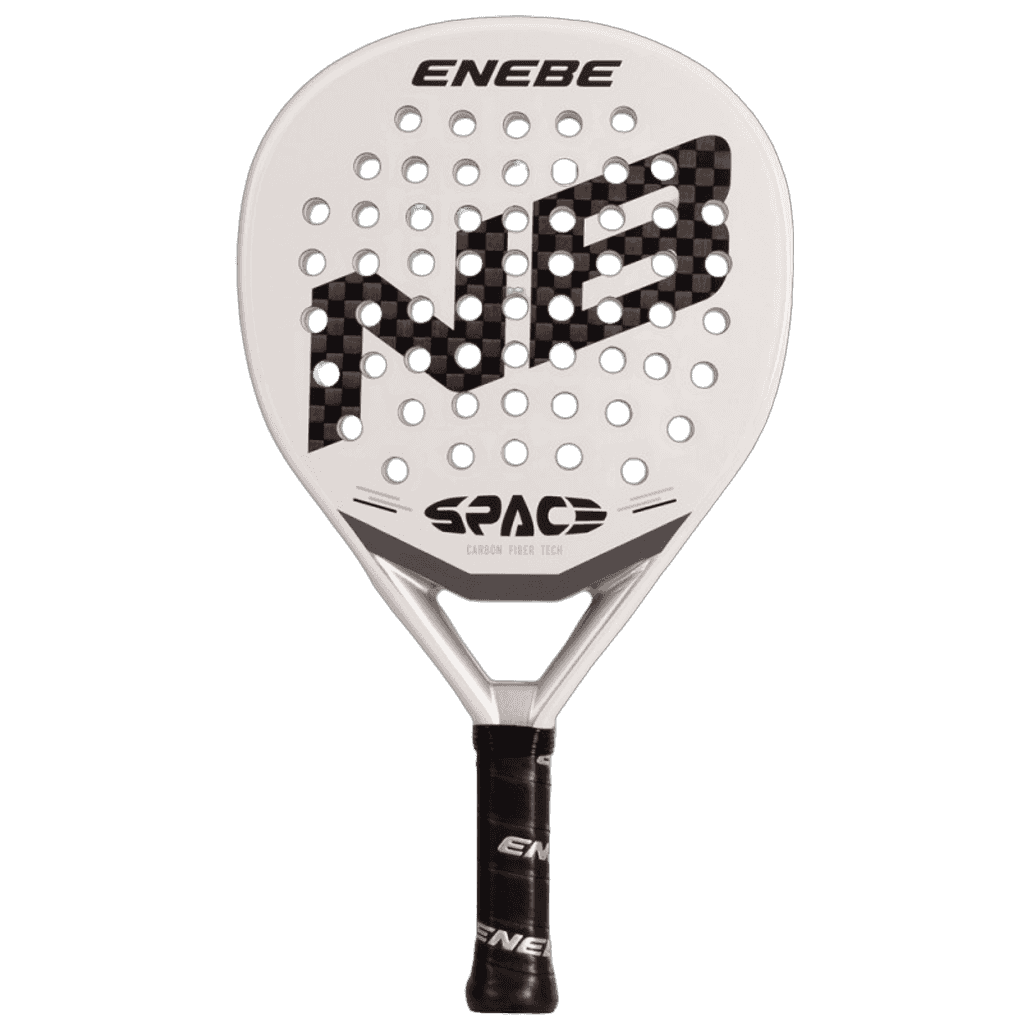
Enebe Space 2025 is a technical tear-shaped racket with a firm, clean response and a clear preference for controlled aggression. I found it more interested in rewarding a well-prepared swing than rescuing a late or loose contact.
It suits an upper-intermediate or advanced player who likes to build pressure through placement, quick volleys, and overhead consistency rather than relying on a full diamond shape to produce easy power.
The character is direct. At the net, it feels stable and predictable; from deep defense, it asks you to provide the pace yourself.
Technical analysis
Shape & balance
The tear shape gives the Space 2025 a useful middle ground between a round control racket and a high-balance diamond. Its medium balance supports attacking play without becoming slow in fast exchanges.
That balance helps on compact blocks and countervolleys. I could keep the racket in front of me without feeling that the head wanted to drop, while still getting enough mass through the ball on attacking volleys and overheads. The trade-off is a moderately demanding sweet spot: clean contact feels excellent, but strikes toward the edges lose consistency quickly.
Materials & construction
Enebe uses a 100% carbon frame, 12K Carbon faces, and a Black EVA HR3 core. Together, they produce a medium-hard feel with a crisp, low-dwell response. The ball leaves the faces quickly, and there is little of the cushioned, elastic sensation that some softer EVA rackets offer.
That construction gives the racket a very clear feedback signal. On center, it feels stable and precise. Off-center, it tells you immediately that you missed. Players who prefer a softer racket to absorb defensive mistakes may find the Space unforgiving, particularly when blocking hard balls close to the body.
On-court feel
Baseline play
From the baseline, I liked the direct response on low-driven lobs and controlled defensive shots. It does not add much free ball exit, so I had to use my legs and complete the swing to send the ball deep. That is not necessarily a flaw, but it defines the racket: passive defense is not its strength.
Off-the-wall play also demands timing. When I met the ball cleanly, the response was predictable enough to guide counters toward the corners. Late contact, however, could feel harsh and underpowered compared with a more forgiving round racket.
At the net
This is where the Space 2025 makes the most sense. The firm faces give volleys a sharp, reliable response, especially on blocks and short countervolleys where direction matters more than brute force. I found it easy to keep the ball low and accelerate through the next volley without losing the racket head.
The racket also behaves well on a chiquita followed by a quick move forward. It feels quick enough in hand for repeated exchanges, while the firmer construction keeps the face stable against pace.
Bandeja and víbora
Overheads are a real strength. The Space gives a controlled, connected feel on the bandeja, making it easier to manage depth and placement rather than overhit. On the víbora, the direct response helps produce a fast, skidding ball when the contact is clean.
Its smash is effective, but this is not a pure power weapon. It can finish points with proper technique and acceleration, yet it is less explosive than a dedicated diamond racket. Placement-oriented smashes and aggressive angles suit it better than expecting effortless power from a compact swing.
Conclusion
I would choose the Space 2025 for a player with reliable technique who wants a firm racket for net pressure, blocks, volleys, and overhead control. It rewards active hands and clean contact.
The compromise is comfort and forgiveness. It will not generate much pace for you from deep defense, and the sweet spot is not especially generous. If you regularly strike the ball late or want a softer response, this one may feel demanding.
What other reviewers say
- PadelTestLabes
This test finds a crisp, direct and predictable response that works particularly well for block volleys, bandejas and viboras. It favours control and placement-oriented smashes over raw power, but requires player-generated pace in deep defence and punishes off-centre contact.
- Padel Tennis Racketsen
The review positions it as a balanced option for upper-intermediate to advanced players, with useful stability, control on blocks and counters, and effective power on volleys and overheads. Its firmer construction is less forgiving away from the sweet spot and is not as explosive as a full diamond racket.
- PadelRacketReviews.comes
This assessment characterises it as a firm, direct attacking racket whose standout trait is power. Its more modest control, comfort and tolerance scores point to a demanding profile rather than one that readily helps imperfect strikes.
Switch Intelligence
Be the first to share where you switched from.
Community reviews
Real feedback from players who used this racket.
Add your review
To submit your review, log in first. You can still read all approved community reviews below.
Add review


