

Dunlop FX Pro 2026
A firm diamond that rewards full acceleration at the net, yet stays composed enough to work the point from the baseline.
Our Take
Shape
Diamond
Weight
365 - 375 gr
Touch
Hard
Core
Pro EVA
Faces
12K Carbon
What we like
- Heavy, penetrating net volleys
- Efficient power on committed smashes
- Direct response with useful spin
What we don't
- Head-heavy feel slows quick exchanges
- Off-center defense loses comfort
- Soft touch volleys feel demanding
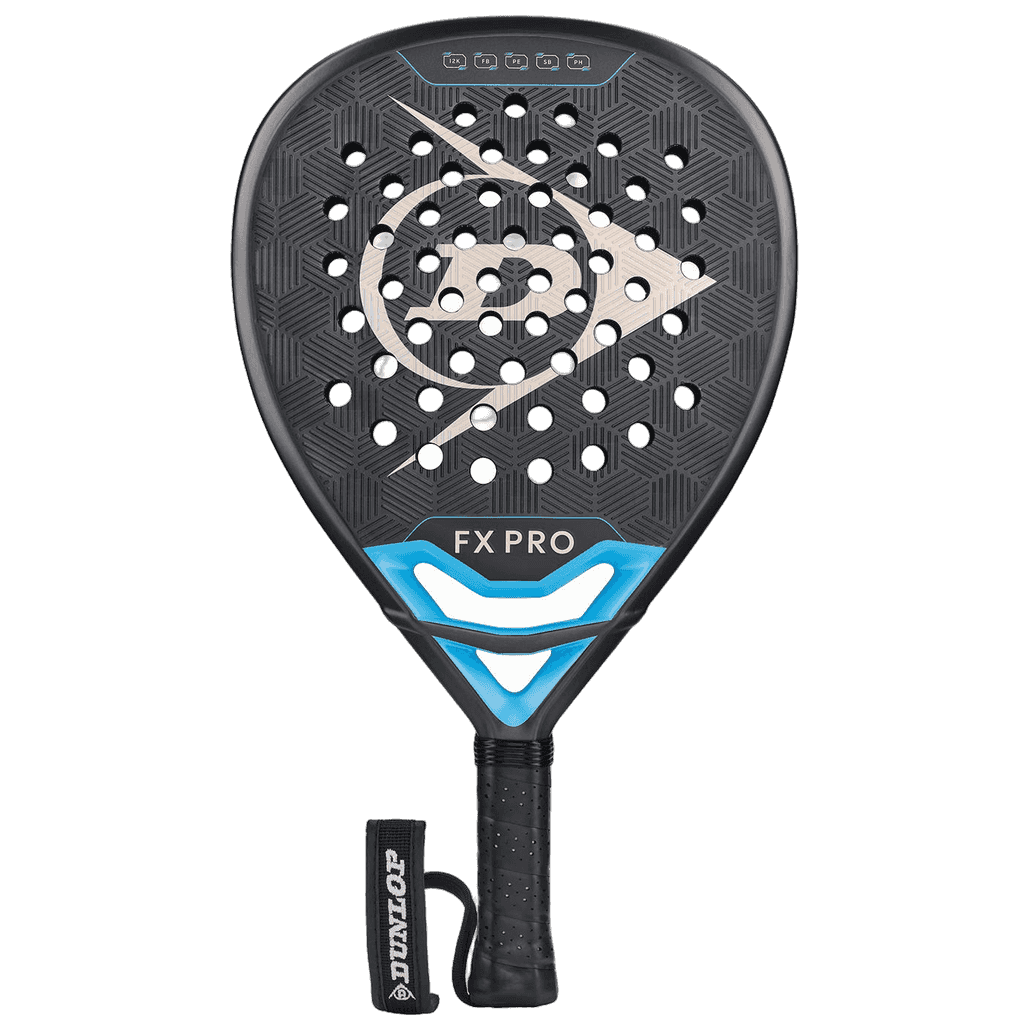
Dunlop FX Pro 2026 is a hard-hitting diamond racket that wants the point to move forward. Its character is direct and firm: accelerate through the ball and it gives you real pace, especially above the net.
I see it in the hands of an intermediate-advanced or advanced player who builds points with aggressive volleys, attacking bandejas, and a smash that finishes rather than merely pressures.
It is not a forgiving comfort racket. The reward is high, but you need to bring clean preparation and a committed swing.
Technical analysis
Shape & balance
The diamond shape and head-heavy tendency put the FX Pro on the attacking side of the spectrum. The balance helps the racket carry momentum through contact, which is noticeable on high volleys and overheads. It does not feel uncontrollable from the baseline, though. Feedback from court testing suggests it is more usable in defense than many high-balance diamonds, and I can see why: the response is direct enough to place blocks and defensive lobs without the face feeling vague.
Still, quick exchanges expose the trade-off. Its maneuverability is decent rather than sharp, so late hands at the net or rushed backhand blocks can feel demanding. Players who prefer a head-light racket that does the work for them will probably find it tiring over a long match.
Materials & construction
The 12K carbon faces and Pro EVA core produce a hard feel with a clean, immediate response. There is little of that soft, trampoline-style ball exit. Instead, the racket tells you clearly whether you met the ball well, and it responds best when you accelerate rather than guide.
That construction also explains its strong punch. Independent testing repeatedly points to a firm contact and serious output on volleys and smashes, while player feedback mentions better spin potential than the plain-looking finish might suggest. The sweet spot is not tiny, but it is not especially generous either. Off-center contact loses some direction and comfort, particularly when defending hard, low balls.
On-court feel
Baseline play
From the baseline, I found the FX Pro more composed than its profile suggests. It has enough ball exit to send a defensive lob deep without overhitting, provided I prepare early and use the full face. Off-the-wall play is manageable because the response stays predictable; the ball does not spring away unpredictably.
What it does not offer is effortless defense. A passive block can sit up, and short preparation makes the head-heavy balance more apparent. This is a racket that asks you to work with your legs and get behind the ball.
At the net
At the net, the FX Pro makes immediate sense. Firm volleys come off heavy and penetrating, with enough stability to redirect pace rather than just absorb it. I particularly like the direct feedback on aggressive backhand volleys: the ball leaves quickly, but I can still feel where it went on the face.
There is also good bite for controlled angles and chiquitas. The racket is not delicate, though. If your game relies on soft touch volleys and last-second wrist adjustments, a softer or faster-handling racket will be easier to live with.
Smash
This is its natural territory. When I commit to the swing, the FX Pro transfers energy very efficiently and produces the kind of heavy smash that forces weak replies or opens the door for a finish. The strong power reported in testing is not just free output; it comes alive when the player accelerates properly.
Its bandeja and víbora also benefit from that firm response. I can drive them with intent and generate useful spin, but they demand timing. A lazy overhead will not get much help.
Conclusion
The FX Pro 2026 suits players who want a firm attacking racket with credible control outside its comfort zone. It rewards proactive padel: taking the net, pressing volleys, and hitting overheads with conviction.
The trade-off is forgiveness. Its head-heavy feel, hard response, and average-sized sweet spot make defensive scrambling and soft touch play less comfortable. If you already generate your own racket speed, though, it gives that effort a very convincing return.
What other reviewers say
- Pala-Hackes
The test found very high punch, a firm feel, and direct response when accelerating—particularly on volleys and smashes. It was more usable from the back court and less punishing than expected for a high-balance diamond racket, though it still rewards proactive play and sound technique.
- r/Padelracketen
A player who says they tested the FX Pro 2026 calls it an exceptionally good all-round racket, with unexpectedly strong power and very good spin potential. Their assessment is notably positive despite finding its design unremarkable.
Switch Intelligence
Be the first to share where you switched from.
Community reviews
Real feedback from players who used this racket.
Add your review
To submit your review, log in first. You can still read all approved community reviews below.
Add review


