

Dunlop FX Hybrid 2026
A teardrop built to press from above the net, with enough composure to keep the point intact when defense takes over.
Our Take
Shape
Tear
Weight
360 - 375 gr
Touch
Medium
Core
Pro EVA
Faces
12K Carbon
Frame
12K Carbon
What we like
- Heavy, penetrating net volleys
- Spin-friendly *bandeja* and *víbora*
- Direct smash finishing potential
What we don't
- Demanding baseline defensive response
- Slower in rapid hand exchanges
- Reduced stability off-center
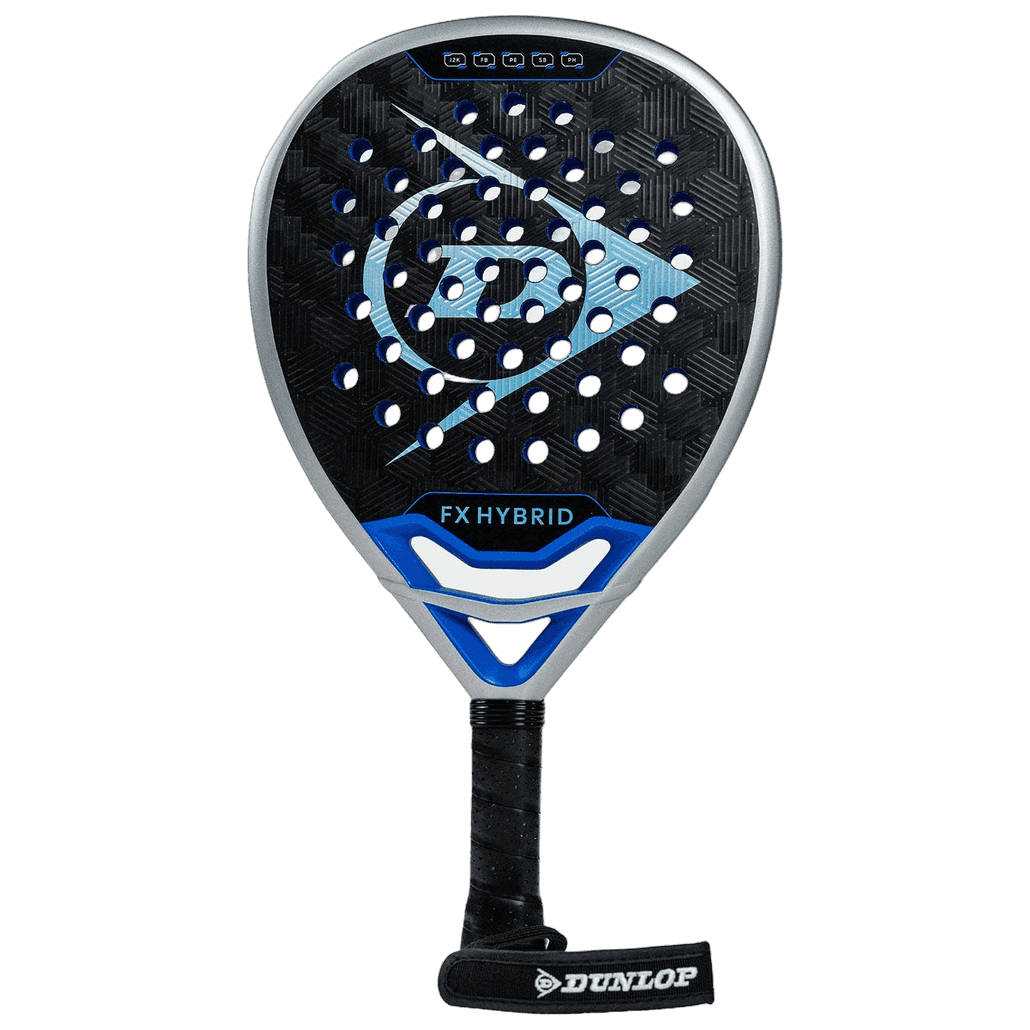
Dunlop FX Hybrid 2026 is an attacking racket with enough control to keep a point organized, but its priorities are clear: heavy overheads, sharp spin, and pressure at the net.
I felt its teardrop shape and high balance most in fast exchanges. It wants the racket head moving through the ball, not sitting passively behind it.
That makes it a better fit for an intermediate-advanced player who builds points to attack than for someone who wants easy defensive help from the baseline.
Technical analysis
Shape & balance
The teardrop mold gives the FX Hybrid a more usable hitting area than a full diamond racket, but the balance still pulls the feel upward. That head-heavy setup helps me generate speed on overheads and gives volleys more weight without needing a huge swing.
There is a trade-off. Quick hand changes at the net take more work than with a head-light racket, especially in tight body volleys or rapid defensive blocks. It is reasonably maneuverable for its attacking profile, as court feedback has also suggested, but I would not call it particularly quick or effortless.
Materials & construction
The 12K carbon frame and faces give the racket a firm, connected response. Contact feels clean rather than muted, and I can feel the ball stay on the face long enough to shape direction and spin.
Its Pro EVA core brings that response back toward a medium feel instead of making it overly hard. There is enough ball exit for countering and for getting depth without overhitting, though it does not have the soft, automatic rebound that helps when defending under pressure. The sweet spot is serviceable, not generous; off-center contact loses some of the stability and pace that make the racket interesting.
On-court feel
Baseline play
From the baseline, I found the FX Hybrid more demanding than forgiving. It can send a low-driven lob deep and make solid contact on off-the-wall play, but it asks for preparation. If I arrive late or let the ball get too close to my body, the higher balance makes the racket feel slower through the recovery.
Blocks are controlled when I hold a firm wrist, yet this is not the racket I would choose for absorbing pace all match. Reports from play testing also place its comfort and defensive behavior below its attacking strengths, which matches the way it responds when the point turns into survival mode.
At the net
This is where the racket makes sense. Volleys come off with good penetration, and the carbon faces give me enough bite to play a short chiquita or press a ball toward the fence without the response becoming vague.
It rewards an active hand. I can accelerate through punch volleys and close the net confidently, but touch drop shots require a softer grip and cleaner timing than they would with a lower-balance, softer racket.
Bandeja and víbora
The FX Hybrid is particularly convincing on the bandeja and víbora. Its head speed and firm response help me cut under and around the ball, producing a skidding trajectory with useful spin. That agrees with the external court feedback, which consistently points to spin and attacking overheads as its strongest area.
On a smash, it has real finishing potential. It does not create power from nothing, though; good technique and a full acceleration are still required.
Conclusion
I would pick this racket for an attacking player who likes to take ownership of the net and uses overheads to force errors or finish points. The blend of carbon construction, medium response, and elevated balance gives it a direct, aggressive character without becoming uncontrollable.
The compromise is defensive ease. Players who rely on soft touch, quick reactions, and automatic help from the baseline may find it tiring over a long match. The FX Hybrid rewards clean preparation and forward intent; it does not flatter passive play.
What other reviewers say
- PadelSapienses
The assessment leans clearly toward attacking play: spin and power stand out, particularly for víboras and smashes. Despite its teardrop shape and high balance, it retains reasonable maneuverability, while comfort and baseline play score more modestly.
Switch Intelligence
Be the first to share where you switched from.
Community reviews
Real feedback from players who used this racket.
Add your review
To submit your review, log in first. You can still read all approved community reviews below.
Add review


