

Wilson Blade V4 2026
Dry and direct, the Blade V4 rewards clean acceleration with precise volleys and shaped *bandejas*, but gives little away in defense.
Our Take
Shape
Tear
Weight
365 gr
Core
Firm EVA Foam
Faces
Carbon Fiber (carbon fiber + fiberglass)
Frame
C2 Tubular Construction (carbon)
What we like
- Precise directional control on volleys
- Quick handling in net exchanges
- Controlled *bandeja* and *víbora* placement
What we don't
- Limited free depth from defense
- Modest sweet spot off-center
- Smashes demand full acceleration


Updated on 15 Oct (shipping cost not calculated)
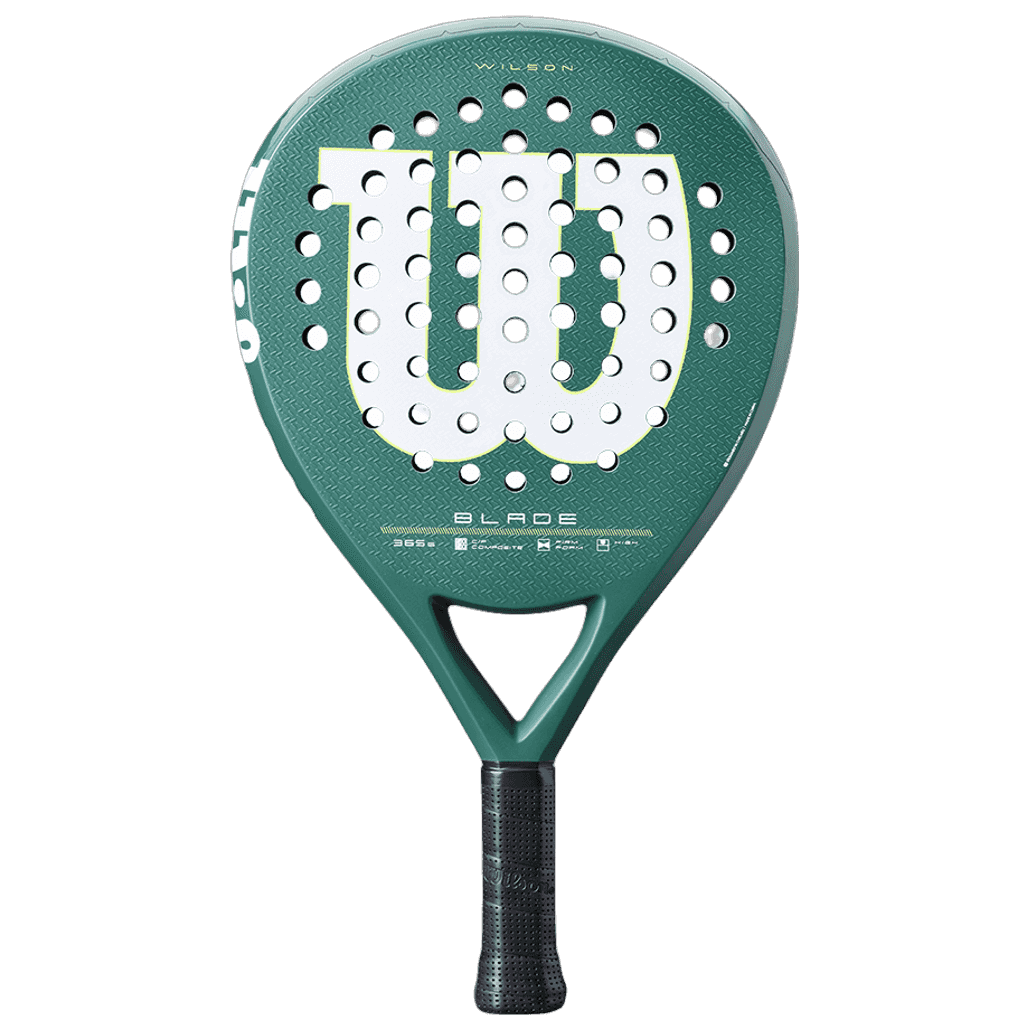
Wilson Blade V4 2026 is a precise, firm racket built for players who want to direct the point rather than let the racket do the work. Its character is dry, connected, and demanding in a good way—provided you arrive on time and strike cleanly.
I see it fitting an intermediate-to-advanced player who values placement, fast hands, and controlled acceleration. It is not a forgiving defensive racket, and it will not hand you easy depth from awkward positions.
Technical analysis
Shape & balance
The tear shape gives the Blade V4 a sensible attacking profile without feeling cumbersome through the air. It gets into position quickly, which matters in fast exchanges at the net and when preparing late for a bandeja.
Its balance feels controlled rather than aggressively head-heavy. That helps the racket stay manageable on compact swings, blocks, and changes of direction. The trade-off is that it does not generate much passive help: on a defensive lob or a rushed ball after the wall, I need to accelerate properly to get length.
Materials & construction
Wilson uses a C2 Tubular Construction carbon frame, along with Carbon Fiber faces that combine carbon and fiberglass. The result is a stable, fairly direct response, without the muted cushioning some softer rackets provide.
The Firm EVA Foam core is central to its behavior. Contact feels firm and dry, with clear feedback on whether I found the center or not. That communication is useful for controlling pace and direction, but the sweet spot is not especially broad. Slightly off-center contact does not collapse completely, yet it loses noticeable depth and comfort.
On-court feel
Baseline play
From the baseline, the Blade V4 rewards an active game. I can place a low-driven lob accurately and keep the ball low with controlled defensive shots, especially when I have time to set my feet. The firm response also makes blocks predictable; the racket does not throw the ball unpredictably off the face.
What it lacks is easy ball exit. Against heavy pressure, particularly on low balls coming off the wall, I cannot simply present the racket and expect free depth. Players who rely on a soft trampoline response may find it underpowered in defense.
At the net
This is where the racket makes the most sense. Its maneuverability helps on reflex volleys, quick blocks, and short punching volleys where direction matters more than brute force. I found it easy to hold the face stable and send the ball where I wanted, rather than overhitting through the middle.
The racket also suits a measured chiquita or drop shot because the touch is so communicative. Still, it asks for clean contact. If my preparation is lazy, the smaller effective hitting area makes the miss obvious.
Bandeja and víbora
The Blade V4 works very well for varied overheads. I can soften a bandeja, add slice, or drive a flatter víbora without the racket feeling slow to reposition. That blend of speed and control is one of its strongest points.
On higher balls, it has enough firmness to finish a flat smash, but power comes from player acceleration rather than automatic rebound. A full, committed swing gets rewarded; a half-hearted smash does not.
Conclusion
I would choose this racket for a player who already creates their own pace and wants more precision in volleys, overheads, and controlled attacking patterns. It feels particularly convincing for someone who spends plenty of time dictating from the net.
The compromise is clear: limited free depth, a merely decent sweet spot, and little forgiveness when defending under pressure. The Blade V4 is not a comfort-first racket. It is a technical tool for players who prefer a direct response and are willing to supply the speed themselves.
What other reviewers say
- PadelTestLaben
This test presents it as a control-oriented racket with a dry, highly communicative feel, working especially well for flat smashes, blocked volleys and sliced shots. In return it demands acceleration and clean contact, offering limited free depth in defence and on rushed wall shots.
- AvisPadelfr
The analysis highlights control and useful maneuverability in fast net exchanges: it gets into position well for reflex volleys and lets players modulate the bandeja in transition. It finds enough power to finish high balls, but rates ball exit and the sweet spot as solid rather than exceptional.
Switch Intelligence
Be the first to share where you switched from.
Community reviews
Real feedback from players who used this racket.
Add your review
To submit your review, log in first. You can still read all approved community reviews below.
Add review


