

Tecnifibre Wall Master 370 2023
A round, quick-handling control racket that makes defense and net exchanges feel calmer, while asking you to supply the finishing speed.
Our Take
Shape
Round
Weight
370 gr
Core
EVA
Faces
TEI carbon fiber (Carbon Shield XTC)
Frame
Graphite / Aramid (X-TOP)
What we like
- Forgiving sweet spot on blocks
- Quick handling in net exchanges
- Easy defensive lobs and wall exits
What we don't
- Limited automatic smash penetration
- Aggressive víboras need racket speed
- Firmer feel than expected
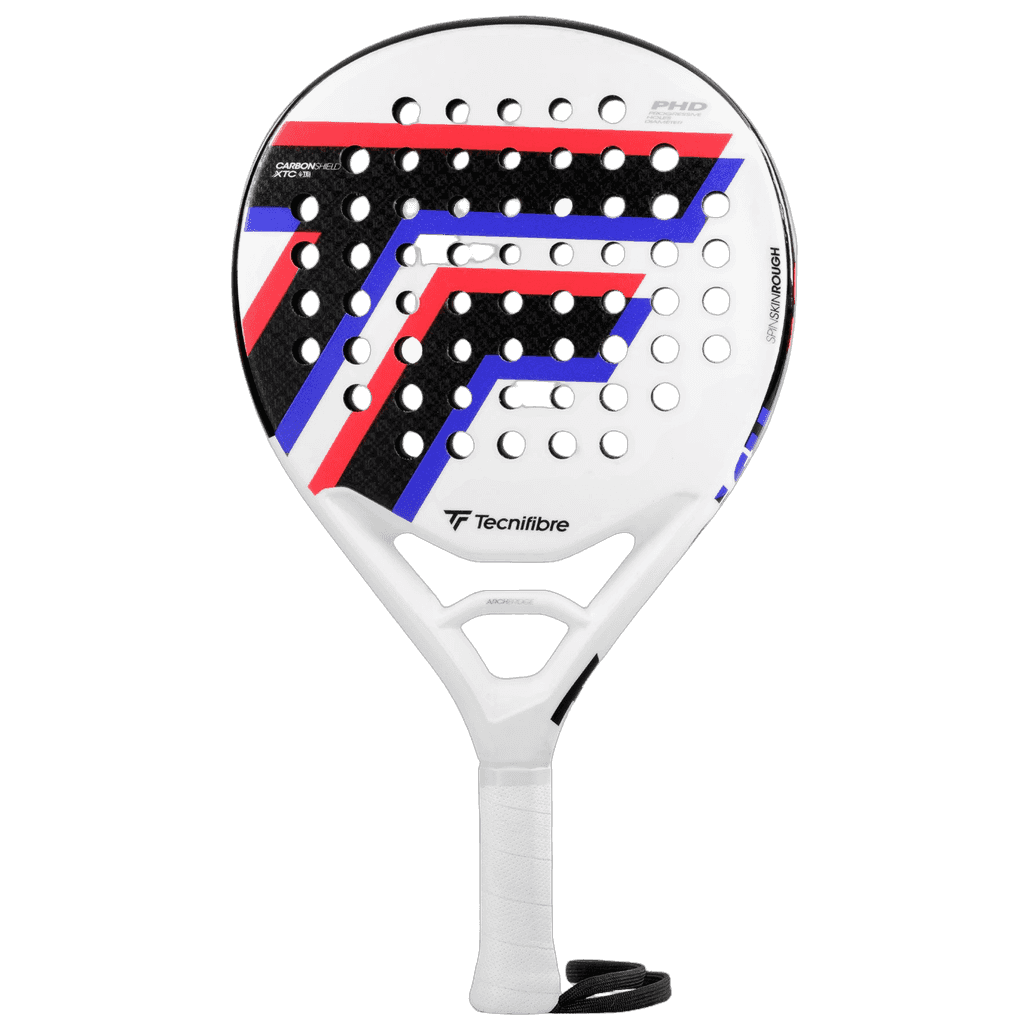
Tecnifibre Wall Master 370 2023 is a control-first racket that still has enough response to keep quick points moving. Its personality is clear: fast through the air, forgiving around the edges of the face, and very comfortable for players who build points with placement rather than brute force.
I see it fitting an intermediate-to-advanced player who spends plenty of time defending, blocking, and looking for a clean transition to the net. It does not turn a passive swing into a winner. What it does is make difficult balls more manageable.
Technical analysis
Shape & balance
The round shape is the foundation of this racket’s behavior. The sweet spot feels broad and accessible, which matters on rushed blocks, wall exits, and volleys taken slightly outside the center. Research testing consistently points to that forgiving response, and it matches the design: this is a racket that gives you room for imperfect contact.
Its balance feels low rather than head-heavy. I would call it quick in the hand, especially during fast exchanges where you need to reset the racket face between shots. That agility is a real advantage at the net, but it also explains its limit overhead: it does not naturally load the ball with the same mass and leverage as a more attack-focused diamond racket.
Materials & construction
Tecnifibre uses a Graphite / Aramid (X-TOP) frame, TEI carbon fibre (Carbon Shield XTC) faces, and an EVA core. On paper, that combination could suggest a soft, muted response. On court, it is firmer than that description implies.
The ball exit is easy, particularly when I am defending deep or lifting a lob from an awkward position. Still, the contact is not overly springy or vague. There is a directness to it that helps with direction on slower shots and gives the face enough stability for firm blocks. Players expecting a plush, soft-foam sensation may find it a little more compact and crisp than expected.
On-court feel
Baseline play
From the baseline, the Wall Master 370 is very dependable. It helps on off-the-wall play, especially when I need to send the ball deep without taking a big swing. Defensive lobs come out with useful height and length, and low-driven lobs are easier to place because the racket does not feel sluggish through contact.
It is also forgiving when the point gets messy. A late contact or a ball caught toward the outer part of the face still tends to travel predictably. That said, the racket will not create heavy pace by itself. If I want to turn defense into a fast counterattack, I need to accelerate the arm and hit cleanly.
At the net
This is where its maneuverability makes the strongest case. Quick volleys, reaction blocks, and compact punch volleys feel natural because the racket gets into position without effort. I can change direction late and keep the face stable enough to avoid floating the ball.
Touch shots are a strong point too. A chiquita or short drop shot benefits from the broad sweet spot and controlled response. The trade-off is that finishing volleys do not have the same automatic weight as they would with a higher-balance power racket. Precision is the weapon here, not raw penetration.
Bandeja and víbora
The racket suits a controlled bandeja very well. I can work spin, choose a target, and keep the ball low without feeling rushed by the racket. Sliced shots have useful bite, while the quick handling helps when the overhead is taken on the move.
A fast, aggressive víbora is less natural. It can be done, but I need proper technique and racket-head speed to make it hurt. The Wall Master 370 favors placement and consistency over explosive overhead pressure.
Conclusion
The Wall Master 370 2023 makes sense for players who value control, defense, and fast net handling. It is particularly convincing for those who rely on lobs, blocks, volleys, and measured overheads to win position.
The compromise is clear: it is not a smash-first racket. Flat smashes, kick smashes, and finishing víboras require you to supply the acceleration. If your game is built around constructing the point and reducing errors under pressure, that trade is a sensible one.
What other reviewers say
- Padel Magazinees
The tester finds it exceptionally well balanced, quick and responsive, particularly for volleys, on-the-run shots and scrambling defense. Despite the soft foam and round shape, it feels relatively firm and supplies adequate punch, though less than the Wall Breaker 375.
- PadelTestLabes
This test positions it as a defensive, placement-oriented racket: it gives easy ball output for lobs and wall retrievals, remains usable on off-center contact, and turns quickly at the net. Bandejas and volleys benefit from precision and spin, while smashes and finishing víboras require the player to generate their own racket speed.
Switch Intelligence
Be the first to share where you switched from.
Community reviews
Real feedback from players who used this racket.
Add your review
To submit your review, log in first. You can still read all approved community reviews below.
Add review


