

Tecnifibre Curva Soft 2025
A soft, quick tear-shape that makes defending and building the point feel easy, though flat finishing shots need more from the player.
Our Take
Shape
Tear
Weight
360 gr
Touch
Soft
Core
Soft Foam
Faces
Carbon and fiberglass
What we like
- Easy defensive lob depth
- Forgiving on off-center contact
- Quick handling in volley exchanges
What we don't
- Limited punch on flat smashes
- Short blocks release too easily
- Fast swings need softer touch


Updated on 26 Oct (shipping cost not calculated)
Are you a store owner? Join our platform to be featured here.
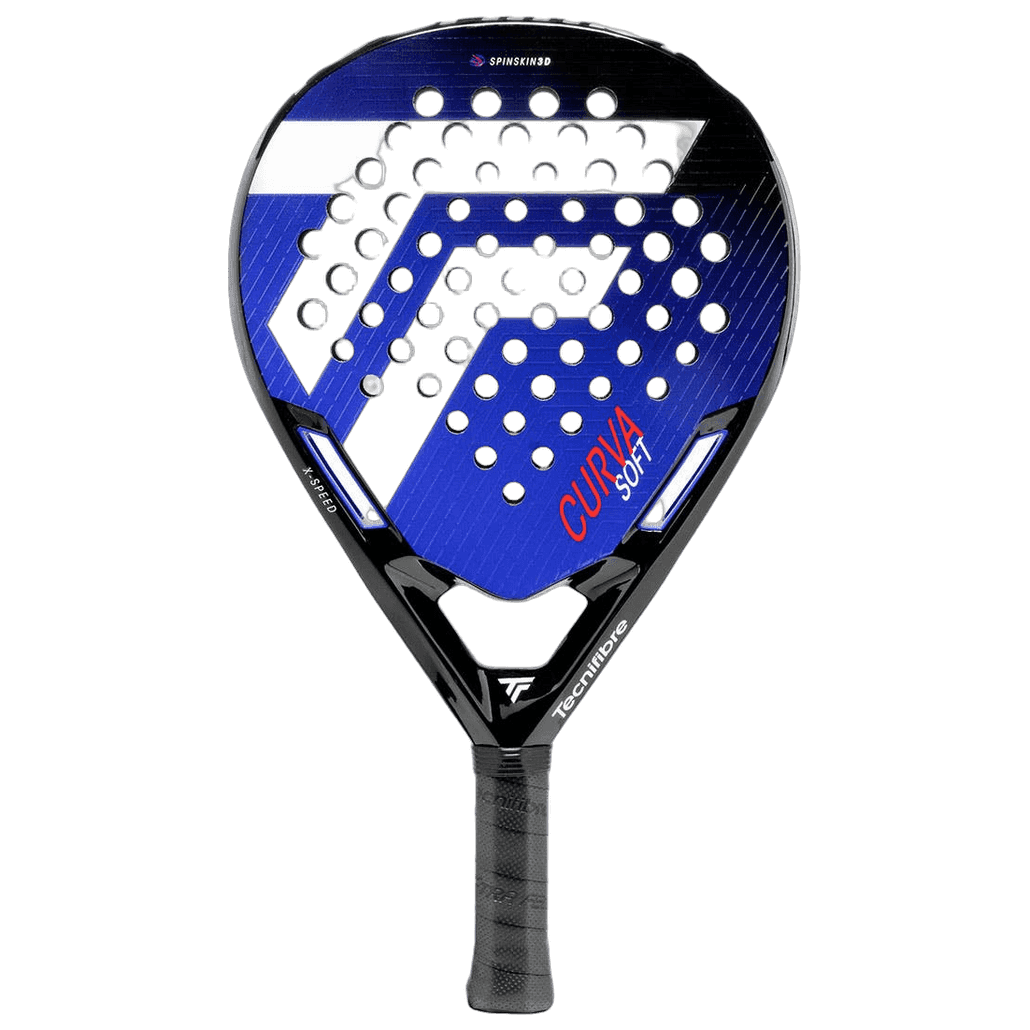
Tecnifibre Curva Soft 2025 is a comfort-first racket with enough shape and speed to keep an improving player involved in every phase of the point. I’d describe it as forgiving rather than passive: it gives the ball a lot of help, especially when you are late or defending under pressure.
Its tear shape and medium balance keep it quick through the air, while the soft feel makes contact noticeably easy on the arm. This is not a racket built around brute-force finishing.
I see it fitting players who build points with depth, lobs, and patient net play rather than trying to end rallies with every overhead.
Technical analysis
Shape & balance
The tear shape gives the Curva Soft a more accessible attacking position than a round control racket, without pulling the balance too far toward the head. I found it easy to bring around on quick exchanges, particularly on backhand volleys and rushed defensive blocks.
The sweet spot feels generous for this type of racket. Off-center contact does not punish you much, which matters when you are digging balls out after the glass or reaching for a low ball at the net. That forgiveness also comes with a trade-off: the response is not especially sharp or compact when you want to kill the ball.
Materials & construction
Tecnifibre uses carbon and fiberglass faces over a Soft Foam core. That combination explains most of the racket’s behavior. The faces do not feel rigid, and the core absorbs vibration well, so contact is comfortable even during longer sessions or when facing heavier hitters.
Ball exit is the main feature. The racket releases the ball easily with a short swing, which is useful from the baseline but can require a softer hand in compact shots. I would not expect the crisp, hard response of a full-carbon racket with a firmer EVA core.
On-court feel
Baseline play
From the baseline, this is where I enjoyed the Curva Soft most. Defensive lobs come off with less effort than usual, and I could find depth without having to overhit. On off-the-wall play, the soft core helps the ball leave the face cleanly, even when contact is not fully centered.
That easy output is valuable for players still building consistency. A low-driven lob also comes naturally because the racket does not demand a big acceleration phase. The downside is that players with a very fast swing may need to moderate their touch; the racket can add more rebound than expected.
At the net
Quick handling is another genuine strength. I could adjust the racket easily in fast volley exchanges, and its maneuverability helps when changing direction late. It also offers enough bite to place controlled volleys and drop shots without feeling disconnected from the ball.
Short blocks are less automatic. Because the ball exits so readily, deadening a hard volley takes deliberate hands and a relaxed grip. If you simply put the face behind the ball, it can sit up more than you want.
Bandeja and víbora
The Curva Soft works well for controlled overheads. I found it easy to shape a bandeja with depth, and the quick head speed helps on a víbora when I wanted to keep the ball low after the glass. It is more about placement and repeatability than raw penetration.
Smash
A flat smash is not its best shot. There is enough power to finish a loose ball, but the racket does not supply the firm, explosive response that makes a smash feel effortless. Players who rely on aggressive overhead winners will notice the ceiling.
Conclusion
I’d choose the Curva Soft for its comfort, fast handling, and unusually easy defensive output. It makes difficult baseline situations more manageable and gives improving intermediate players a forgiving response without feeling clumsy at the net.
The trade-off is clear: it does not hit with much authority on flat smashes, and touch blocks need care because of the high ball exit. For players who prioritize control through softness and easy depth over outright finishing power, that trade-off makes sense.
What other reviewers say
- PadelTestLabes
The test finds it very easy to get depth from defensive shots and lobs, with quick handling and useful grip for bandejas and víboras. In return, the soft response and medium balance reduce punch on flat smashes and make short blocking volleys harder to keep dead.
- PadelRacketReviews.comen
This review frames it as a forgiving, comfortable and easy-handling option for improving players, with a balanced control-to-power response. Its main limitation is finishing ability: it does not provide especially high outright power.
Switch Intelligence
Be the first to share where you switched from.
Community reviews
Real feedback from players who used this racket.
Add your review
To submit your review, log in first. You can still read all approved community reviews below.
Add review


