

Siux Trilogy Elite 5 2025
A round control racket with a comfortable, forgiving response, quick enough in defense and composed when the point slows down.
Our Take
Shape
Round
Touch
Medium
Core
Soft EVA
Faces
12K Carbon
What we like
- Broad sweet spot on blocks
- Quick handling in defensive transitions
- Controlled *bandeja* and *víbora* placement
What we don't
- Moderate smash finishing output
- Limited explosive rebound at speed
- May feel heavy for sensitive arms
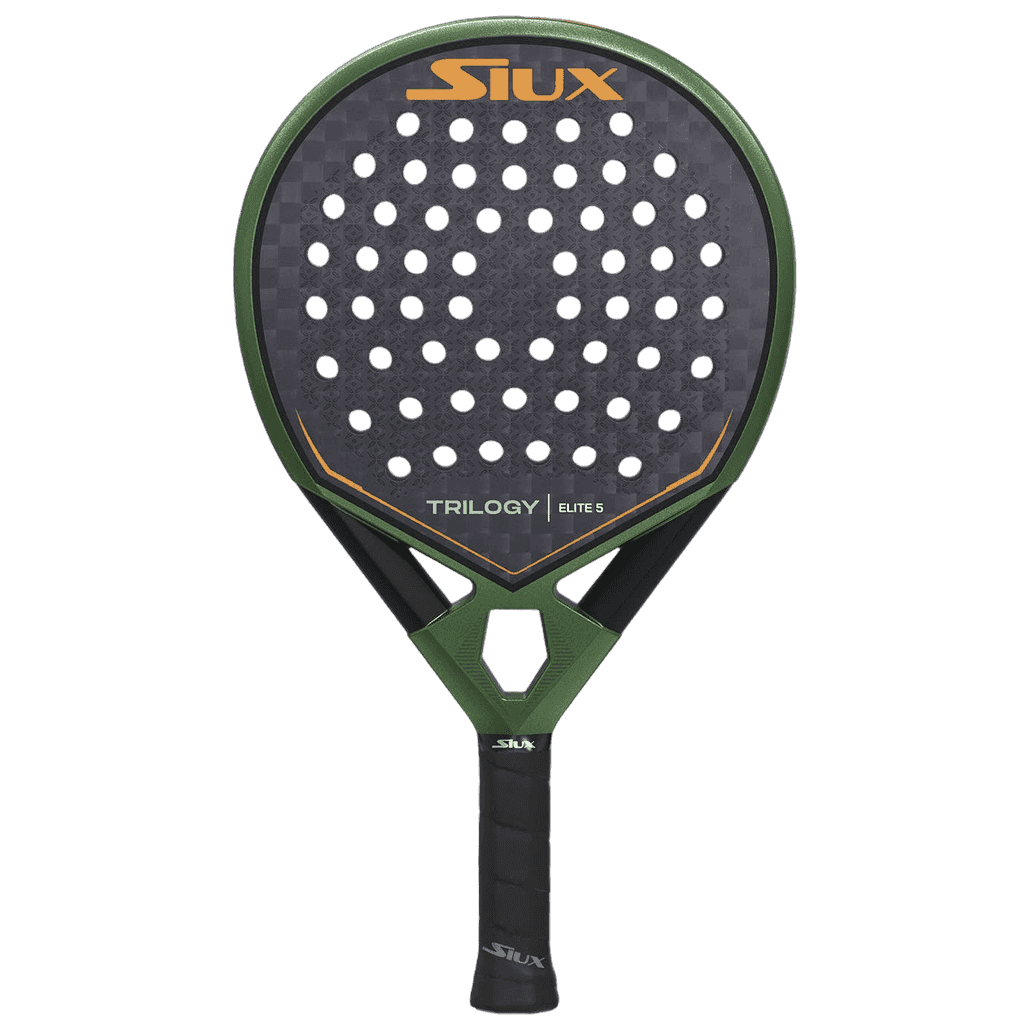
Siux Trilogy Elite 5 2025 is a control-first racket that keeps the game simple: broad contact, quick handling, and enough ball exit to avoid feeling passive from the baseline. It is built for players who value placement over trying to finish every high ball.
I see it suiting intermediate and advanced players who construct points, use the lob well, and want a more forgiving response in defense. It will not turn a modest smash into a winner.
Its character comes from a round shape, a manageable balance, and a medium feel that sits closer to comfortable than crisp.
Technical analysis
Shape & balance
The round format places the sweet spot centrally and gives this racket its calm, predictable response. Reports from court testing consistently point to a generous hitting area, and that matches what I would expect from this layout: blocks, defensive lobs, and off-the-wall contacts should require less precise centering than with a diamond racket.
The balance also appears restrained enough to keep the head moving quickly. That matters during fast defensive transitions and at the net, where I want to adjust the face late without feeling like the racket is pulling ahead of my hand.
There is a caveat. One owner with elbow synovitis found it too heavy in use. That does not mean every player will have the same experience, but anyone sensitive to arm fatigue should demo it if possible and pay attention to the particular unit’s balance.
Materials & construction
The 12K Carbon faces give the racket a cleaner, more controlled strike than fiberglass would, without pushing it into a hard, demanding category. Underneath, the Soft Eva core should provide the softer compression that helps the ball leave the face in defensive situations.
That material pairing explains the medium response well. I would expect accessible ball exit at lower swing speeds, but not the sharp, explosive rebound of a stiff core and harder carbon face. For control players, that is a sensible trade.
On-court feel
Baseline play
This is where the Trilogy Elite 5 makes most sense. The wide sweet spot should help when I am late on a wall return or stretching to keep a low ball alive. Reviews specifically note its speed in defensive exchanges, and that is valuable for turning a pressured block into a controlled lob rather than just surviving the shot.
Its ball exit looks useful, but not wild. I can see it working well for measured depth and low-driven lobs. Players who rely on the racket to fire the ball deep with minimal input may want a livelier core.
At the net
At the net, I would expect quick hands rather than brute force. The round head and manageable balance should make it easy to keep the racket stable through compact volleys, chiquitas, and reaction blocks.
The softer core also gives some margin on touch shots. Still, I would not expect a particularly heavy finishing volley unless I accelerate properly. This is a racket for directing pressure, not simply punching through opponents.
Bandeja and víbora
The same controlled response should suit a placement-focused bandeja and a shaped víbora. I would use it to keep the ball low and move opponents rather than chase outright winners. The face should offer enough bite for variation, though it is not marketed by its construction as an extreme-spin tool.
Conclusion
I would choose this racket for a control-minded player who spends plenty of time defending, values a forgiving contact point, and wants fast handling without a hollow or overly soft response.
The trade-off is clear: smash output is moderate. If your game depends on ending points through sheer overhead power, this is not the right shape or material setup. It earns its place through placement, consistency, and a friendly response under pressure.
What other reviewers say
- TuMejorPalaes
This review places it firmly on the control side: it helps with placement, offers a broad sweet spot, and moves quickly in defensive transitions. The trade-off is only moderate output for aggressive smashes.
- Racketguidees
The only visible owner review, from a 44-year-old recreational player with elbow synovitis, finds the racket too heavy.
Switch Intelligence
Be the first to share where you switched from.
Community reviews
Real feedback from players who used this racket.
Add your review
To submit your review, log in first. You can still read all approved community reviews below.
Add review


