

Siux Beat Control 3 2026
A soft-feeling control racket with easy handling, steady response, and the kind of calm ball exit that keeps rallies on your terms.
Our Take
Shape
Round
Weight
355 - 375 gr
Touch
Medium-Soft
Core
EVA
Faces
Fiberglass
Frame
Fiberglass
What we like
- Easy steering from low balance
- Stable volleys and blocks
- Comfortable, forgiving off-center hits
What we don't
- Limited punch on smashes
- Little reward for pace
- Not aggressive on overheads


Updated on 12 Aug (shipping cost not calculated)
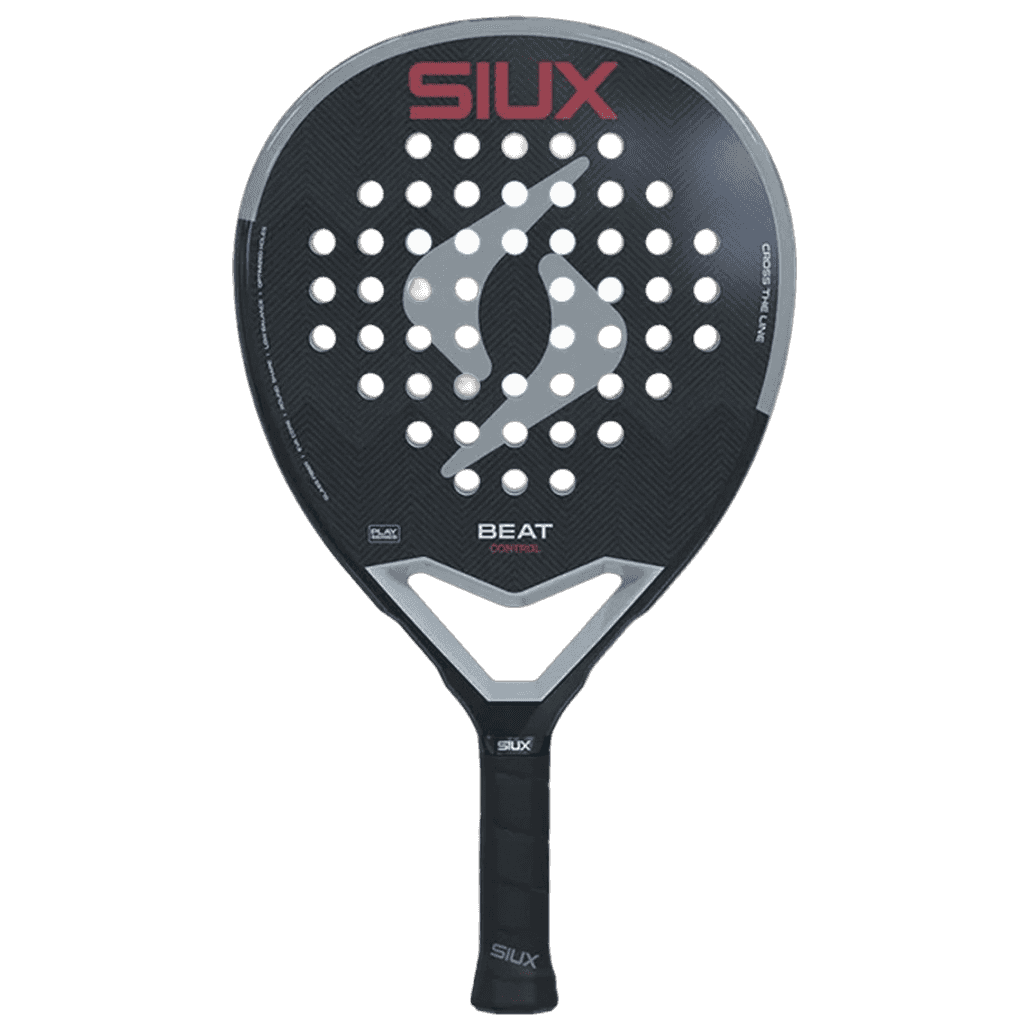
Siux Beat Control 3 2026 is a control-first racket with a soft touch and a very manageable feel. It’s built for players who want to place the ball, defend with ease, and keep the point tidy without fighting the racket on every swing.
I see it as a safe, low-demand option rather than an attacking one. The message is pretty clear: it wants to help from the back of the court, on volleys, and in repeatable patterns, not turn every ball into a winner.
Technical analysis
Shape & balance
The round shape gives it a generous sweet spot and keeps the response predictable. Add the low balance, and the racket feels easy to steer. That matters more than people admit in actual points. I can get it into position quickly on blocks, defensive lobs, and quick exchanges at the net.
It doesn’t feel head-heavy or demanding. That helps with control, but it also explains why it won’t load the ball with much violence. If your game lives off heavy overheads, this is not the profile I’d pick first.
Materials & construction
The fiberglass frame and faces, plus the EVA core, create a soft-to-medium-soft feel with decent comfort on contact. The ball exit is progressive rather than explosive. In practice, that means the racket gives you help when you’re under pressure, but it doesn’t catapult the ball in a wild way.
The construction also explains why off-center hits are handled quite well. I don’t get that harsh, hollow sting some cheap control rackets can have. Stability is decent for the category, especially considering the price point. Still, this is not a crisp carbon racket. If you want a firmer response and more bite through the ball, you’ll feel the limit pretty fast.
On-court feel
Baseline play
From the baseline, this racket is very easy to trust. Defensive lobs come out with little fuss, and I can reset points without needing to force the swing. It rewards calm, compact mechanics. That makes it a nice companion in long rallies where you’re absorbing pace and looking for a clean next ball.
The downside shows up when I try to speed things up. There’s control, yes, but not much punch. If I try to flatten a low ball or accelerate a winner from deep, the racket asks for extra effort and gives back only modest reward.
At the net
This is where the Beat Control 3 feels most natural. Volleys are stable and easy to direct. I can block firmly, place the ball into spaces, and keep pressure on without the racket getting twitchy in the hand. That stability is one of its better traits.
It also helps in quick exchanges because the maneuverability is good enough to react without delay. But again, the limit is power. When I want to finish the point with authority, the racket doesn’t supply much free speed.
Bandeja and víbora
On overheads, I’d call it controlled rather than aggressive. The racket behaves nicely on the bandeja, with enough comfort to keep the ball deep and well directed. It also stays stable when you’re repeating that shot over and over, which matters in real matches.
The víbora is similar: easy to manage, accurate, and not demanding. What it doesn’t do is make the ball bite hard off the glass or jump with extra venom. You get placement and comfort more than real damage.
Conclusion
This is a good fit for players who value control, comfort, and easy handling over raw punch. If your game is built on defense, clean transitions, and reliable net work, it makes a lot of sense.
I wouldn’t choose it for an aggressive hitter who wants to dominate with smashes or forceful overheads. The trade-off is clear: you gain forgiveness and control, but you give up power and heavy finishing ability.
What other reviewers say
- PadelReviewes
The review presents it as a very safe control racket from the back of the court, with progressive ball output and good stability on volleys and bandejas. It is not built for violent finishing shots; instead it favors placement, easy handling, and a comfortable strike feel.
- PadelScouten
It is described as a low-balance, soft-feeling racket designed to prioritize precision and maneuverability. It stands out in defensive exchanges, volleys, and repeatable returns, but falls short if the player wants explosive power.
- Racketguide.comen
The page places it in a max-control, comfort-first profile, with a forgiving response that helps you build points without punishing small errors. The trade-off is a less aggressive reaction when trying to speed up play or finish the point.
Switch Intelligence
Be the first to share where you switched from.
Community reviews
Real feedback from players who used this racket.
Add your review
To submit your review, log in first. You can still read all approved community reviews below.
Add review


