

Royal Padel Whip Light 2026
A featherlight, deeply cushioned round racket that makes defense and touch feel effortless, though it asks more of your smash.
Our Take
Shape
Round
Weight
350 - 365 gr
Touch
Soft
Core
High-recovery soft polyethylene
Faces
Carbon-reinforced Fibertech
Frame
Carbon-reinforced Fibertech
What we like
- Easy depth on defensive lobs
- Quick hands in net exchanges
- Broad, forgiving sweet spot
What we don't
- Gets pushed around by pace
- Limited punch on flat smashes
- Muted feedback on hard contact


Updated on 26 Oct (shipping cost not calculated)
Are you a store owner? Join our platform to be featured here.
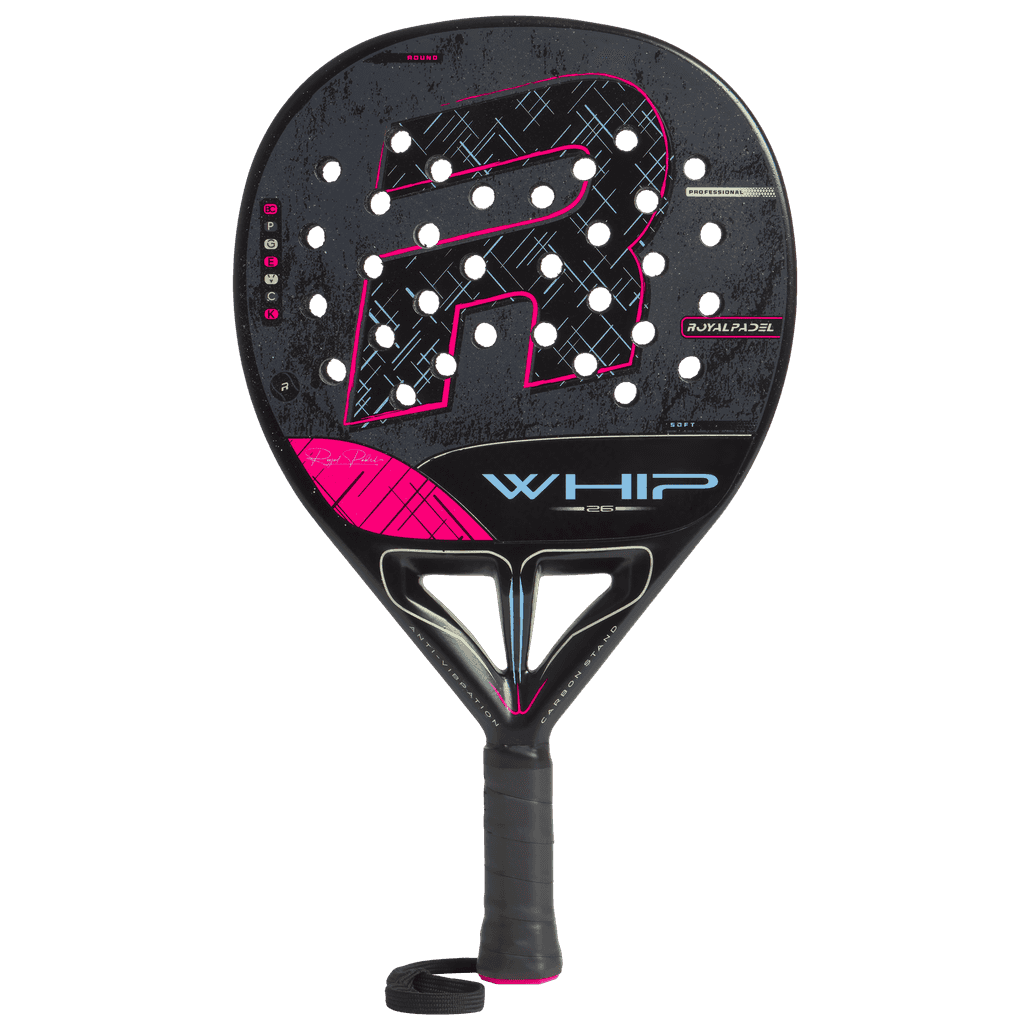
The Royal Padel Whip Light 2026 is a comfort-first racket built around easy depth, quick reactions, and a very forgiving response. It wants to help me defend, reset the point, and play with margin rather than force the winner.
Its round shape and soft feel give it a clear identity. I’d put it in the hands of a player who values touch, arm comfort, and fast preparation more than a heavy ball through the court.
Technical analysis
Shape & balance
The round mold keeps the sweet spot broad and high enough to remain useful when contact is not clean. That matters in real defensive exchanges, especially when I am late on an off-the-wall ball or need to block a hard volley with a compact swing.
Balance feels low rather than head-heavy. The racket moves quickly through preparation and is easy to adjust at the last moment. That agility is a major part of its appeal, but there is a cost: against fast opponents, it does not have the same planted stability as a firmer, more head-heavy racket.
Materials & construction
Royal Padel uses a Fibertech frame reinforced with carbon and matching Fibertech faces, paired with a soft high-recovery polyethylene core. The result is very elastic and damped. Contact feels cushioned rather than crisp, with ball exit arriving easily from shorter swings.
I found that construction particularly friendly on the arm. It absorbs vibration well and does not punish imperfect contact. Players who want a dry, sharp carbon response may find it too muted, though. There is less direct feedback from the faces, and the ball can feel slightly disconnected when I try to hit through it hard.
On-court feel
Baseline play
From the baseline, this is where the Whip Light makes the most sense. Defensive lobs come off with little effort, and wall recoveries carry depth without asking me to overhit. On blocks and resets, I can keep the racket face stable enough to redirect pace and buy time.
The broad sweet spot also gives me confidence on lower contacts. A short swing produces useful ball exit, which is valuable when I am under pressure. What it does not do is drive a particularly heavy ball back at the other pair. Against hard hitters, I need clean technique and good positioning because the racket can get pushed around outside the center.
At the net
Quick hands are the story at the net. I can react late, close the face on a fast exchange, and play controlled volleys without feeling the racket lag behind me. It is especially comfortable for placement, soft angles, and pace changes rather than trying to finish every ball.
Punch volleys are less convincing. The racket will send the ball deep, but it does not naturally produce the weight or firmness I get from a more solid carbon build. I have to accelerate properly if I want the volley to bite through the court.
Bandeja and víbora
The soft response makes a bandeja easy to shape, particularly when I want a controlled ball toward the side wall. Cut shots are accessible and forgiving, and I can vary height and pace without much fuss.
A long víbora asks more from me. There is not much inertia through the contact, so I need to create racket-head speed myself to keep the ball low and aggressive.
Smash
This is not a smash-focused racket. Flat smashes lack the authority of a harder, head-heavier model, and a por-3 finish will depend far more on my technique, timing, and angle than on free power from the racket.
Conclusion
I’d choose the Whip Light for defensive-minded intermediate players, comfort-focused players, or anyone returning from arm discomfort who still wants a responsive racket at the net. It rewards compact swings, patient construction, and clean placement.
The trade-off is clear. I gain maneuverability, easy ball exit, and forgiveness, but give up stability against heavy pace and top-end finishing power. Players who build points and use the lob well will get more from it than players who want their racket to dominate with the smash.
What other reviewers say
- padel.howen
The reviewer finds it exceptionally soft, quick and comfortable, making compact blocks, lobs and resets easy. The trade-off is lower solidity against heavy pace and too little mass for punch volleys or authoritative flat smashes.
- PadelTestLaben
This test portrays it as a defensive, point-building racket: it supplies easy wall-ball depth, a broad usable sweet spot and deep volleys from short swings. Bandejas and cut shots are accessible, but long víboras and por-3 smashes require the player to supply the speed and angle.
Switch Intelligence
Be the first to share where you switched from.
Community reviews
Real feedback from players who used this racket.
Add your review
To submit your review, log in first. You can still read all approved community reviews below.
Add review


