

Nox VK10 Ventus Control 12K 2026 Aranzazu Osoro
A calm, precise control racket that stays composed in defense, blocks cleanly, and gives your *bandeja* real shape without chasing winners.
Our Take
Shape
Round
Weight
360 - 375 gr
Touch
Medium-Hard
Core
MLD Black EVA
Faces
12K Xtrem carbon fiber
Frame
Carbon fiber
What we like
- Stable blocks under pressure
- Predictable response on defense
- Clean volleys and *bandejas*
What we don't
- Limited free power output
- Smashes lack finishing help
- Passive play gets no boost


Updated on 26 Oct (shipping cost not calculated)


Updated on 17 Oct (shipping cost not calculated)
Are you a store owner? Join our platform to be featured here.
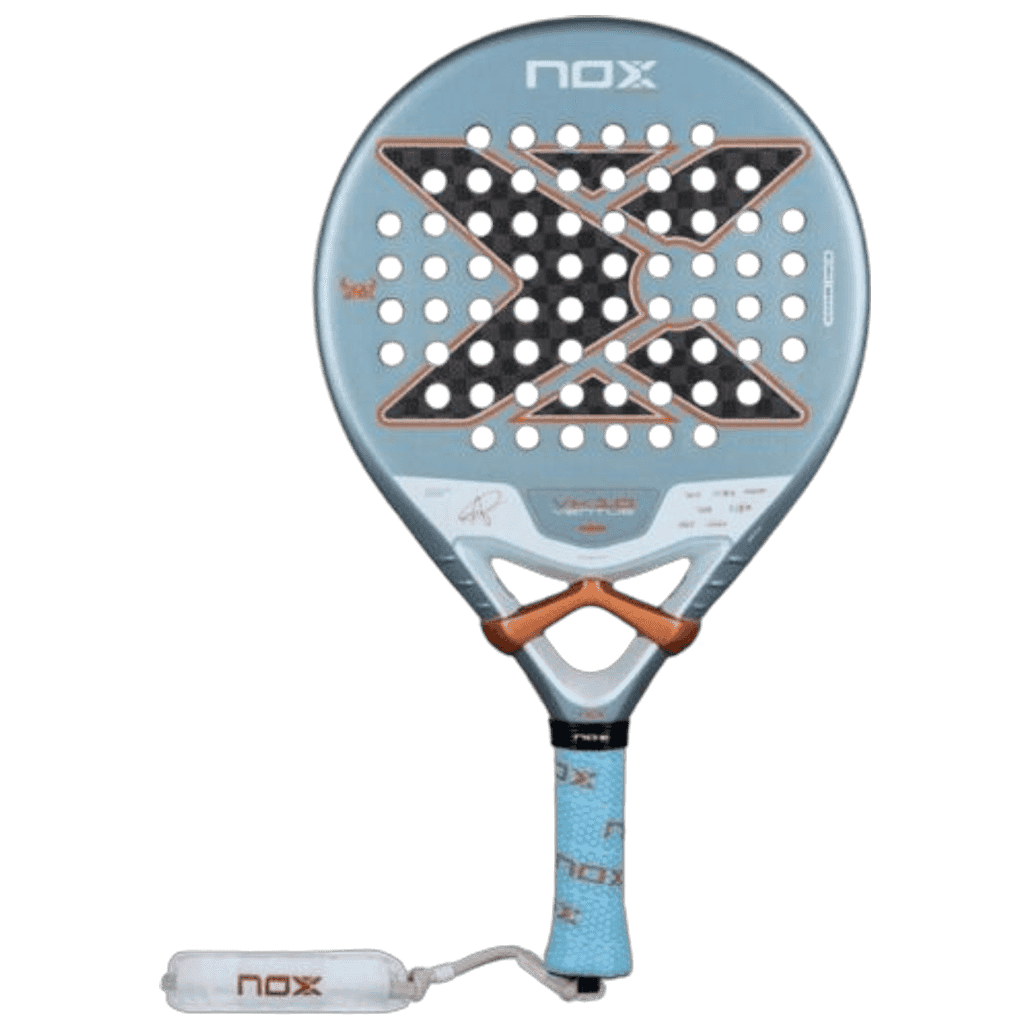
The Nox VK10 Ventus Control 12K 2026 Aranzazu Osoro is a control-first racket with a calm, disciplined character. It wants you to build points, not rush them. I feel that from the first block at the net and especially when the rally gets messy.
Its round shape, medium-hard feel, and Carbon Fiber 12K Xtrem faces give it a very organized response. There’s enough rebound to keep the ball moving, but the main story is stability. This is a racket for players who value placement, defensive work, and clean execution over raw finishing power.
Technical analysis
Shape & balance
The round mold and centered sweet spot make this racket easy to trust in pressure moments. Balance stays on the controlled side, so it doesn’t feel sluggish in transitions, but it also never pretends to be an attacking cannon. That’s the trade-off. You get a very predictable frame of reference on contact, especially on awkward balls and late preparation.
I like how it behaves when you’re trying to keep the ball low, cross-court, or deep into the corners. It doesn’t force extra pace. It asks for good direction. That makes it less forgiving for players who want free help on overheads, but it pays you back with a clear, repeatable response.
Materials & construction
The Fibra de carbono frame and MLD Black EVA core give the racket a firm, organized feel without turning it into a brick. The 12K face construction adds structure and bite, so contact feels crisp rather than mushy. That said, this is not a soft-feeling racket with easy ball launch. You need to supply most of the pace yourself.
The construction also explains why the racket feels so stable on off-center contact. Blocks hold their line well, and the sweet spot feels generous enough to rescue imperfect swings. Spin is available, but it never takes over the shot. Control remains the priority.
On-court feel
Baseline play
From the back of the court, this racket does some of its best work. Defensive lobs come out controlled and repeatable, and the rebound near the glass feels measured rather than lively in a bad way. That predictability matters when you’re under pressure and just want to reset the point.
It’s also very good on blocks and low balls. Opponents can hit heavy, but the racket absorbs pace well and keeps your reply tidy. What it won’t do is rescue lazy footwork or generate extra ball speed for free. If you stay passive, it will feel honest about that.
At the net
At the net, the VK10 stays composed. Volleys come off cleanly, with a direct response that helps you place the ball without fighting the racket. It’s especially nice on quick exchanges because it doesn’t get twitchy when the pace rises.
What I don’t get here is explosive finishing help. If you want a racket that turns every volley into a winner, this isn’t that profile. It rewards precision more than violence, and that shows up in how it handles fast hands battles.
Bandeja and víbora
This is probably the area where the racket feels most natural in attack. The control-oriented build makes the bandeja easy to guide, and the víbora comes off with enough bite to stay useful without losing shape. The ball doesn’t jump wildly, which helps when you’re trying to hold the net and keep your opponent pinned back.
I also like it for transition play because the response stays predictable when you’re moving forward. It’s a racket that lets me place first and finish later.
Conclusion
I’d point this racket toward players who win points through structure, timing, and patience. If your game is built on defense, placement, and sharp net control, it gives you a lot to work with.
The compromise is obvious: limited free power and a modest ceiling on overhead damage. Smashes are workable, but they are not the main attraction. If you want stability, easy handling, and a racket that keeps you in command of the point, this one makes sense. If you want help ending rallies fast, I’d look elsewhere.
What other reviewers say
- padelracket.reviewen
The racket is portrayed as very stable and predictable, built for point construction, placement, and defense rather than finishing power. Volleys and blocks feel clean and controlled, but the offensive ceiling is clearly limited.
- Padel Insidede
It stands out in defense and slower transition play: it absorbs opponent pace well, keeps the rebound predictable, and makes precise lobs and cross-court balls easier. At the net it feels calm and lets you block and adjust quickly without getting twitchy.
- Vidmar Sporthr
The emphasis is on absolute control, with low balance and a large, centered sweet spot that helps keep blocks stable and return difficult balls safely. The 12K face and MLD Black EVA core provide solid ball output without losing composure when the pace increases.
Switch Intelligence
Be the first to share where you switched from.
Community reviews
Real feedback from players who used this racket.
Add your review
To submit your review, log in first. You can still read all approved community reviews below.
Add review


