

Nox Equation Soft Advanced 2026
A soft, easy-riding control racket with a generous sweet spot, quick handling, and enough comfort to stay fresh deep into long matches.
Our Take
Shape
Round
Weight
350 - 365 gr
Touch
Medium-Soft
Core
HR3 Soft
Faces
Fiberglass
Frame
Carbon fiber
What we like
- Easy ball exit
- Huge forgiving sweet spot
- Very maneuverable in defense
What we don't
- Smashes lack finishing punch
- Limited heavy overhead power
- Not for brute-force hitting


Updated on 26 Aug (shipping cost not calculated)
Are you a store owner? Join our platform to be featured here.
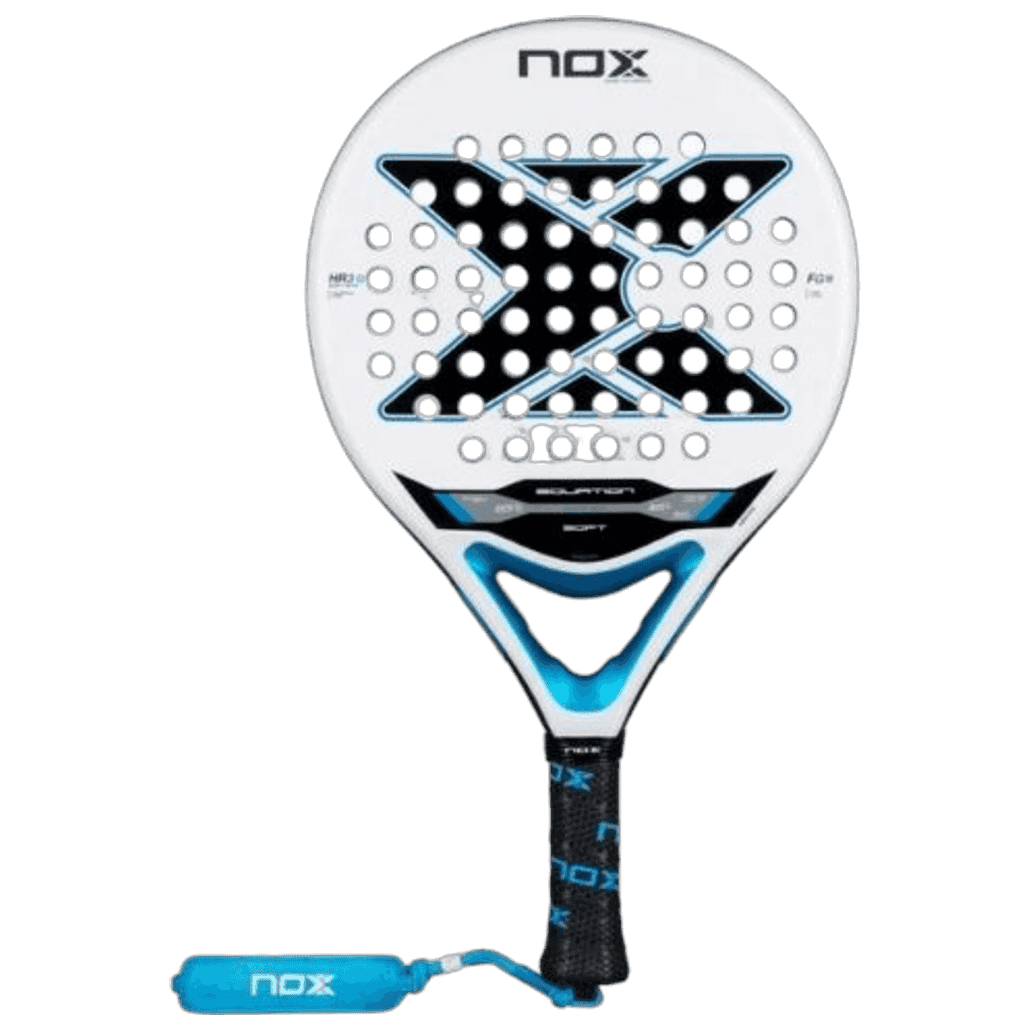
The Nox Equation Soft Advanced 2026 is a control-first racket with a very soft personality and a lot of forgiveness. I feel it as easy-going rather than demanding: it gives you help from the back of the court, stays comfortable over long matches, and keeps the ball moving without asking for a violent swing.
Its identity is pretty clear. Round shape, fiberglass faces, carbon fiber frame, and a Medium-Soft feel put it in that lane where comfort and placement come before raw finishing power. I’d point it toward players who want stability, maneuverability, and a racket that won’t punish them when the timing is a little late.
What it does not do is disguise its limits in attack. If you want a racket that turns every overhead into a free point, this is not that frame. It plays smarter than it plays harder.
Technical analysis
Shape & balance
The round mold gives this racket a big, friendly sweet spot and a very predictable response. I notice the head stays easy to place in defense and on quick exchanges at the net, which makes the racket feel lighter in motion than its category might suggest.
Balance is on the controlled side, so it never feels head-heavy or tiring through a match. That helps a lot when you’re blocking pace, resetting from the baseline, or handling awkward balls off the wall. The trade-off is obvious: there’s not much extra leverage when you try to finish with brute force.
Materials & construction
The mix of fiberglass faces and a carbon fiber frame is what gives this racket its accessible character. Fiberglass softens the response and adds easy ball exit, while the frame keeps things stable enough that the racket doesn’t feel flimsy on contact.
The HR3 Soft core is the other main piece of the puzzle. It gives the racket that cushioned, arm-friendly sensation people keep coming back to in reviews. I don’t find the impact harsh at all. Spin is helped by the softer response too, especially on sliced contact and lifted shots, but the construction is much more about comfort and control than heavy impact.
On-court feel
Baseline play
From the back of the court, this racket is very easy to live with. Defensive lobs come off the faces cleanly, blocks sit well, and there’s enough rebound to help you recover depth without having to force the shot. In off-the-wall play, the soft response makes the first contact feel secure and predictable.
What I like most here is how little it fights me. I can defend under pressure, keep the ball low, and change direction without feeling like I’m swinging a brick. What I don’t get is a lot of free depth on aggressive drives. The racket helps you play, but it does not overwhelm the ball.
At the net
At the net, the racket stays very maneuverable. Volleys are quick to set, and the face position feels easy to correct late, which is useful in fast hands exchanges. The ball comes off with a comfortable rebound rather than a sharp, explosive ping.
That same softness makes touch shots feel natural. Drop shots and soft counters sit nicely, and I can work the racket through chiquitas without losing control. Still, when the point demands a hard punch volley, I can feel the limit. It’s stable enough, but not a racket that wants to bully the ball.
Bandeja and víbora
This is where the racket plays to its strengths. The easy ball exit helps the bandeja come off smoothly, and the softer feel makes it easier to guide the ball with spin rather than just hit through it. The víbora also benefits from that extra forgiveness on contact.
I wouldn’t call it a heavy overhead racket, though. It gives you placement and comfort before it gives you violence. If your game is built around forcing errors with weight and pace, you’ll probably want something stiffer.
Conclusion
I see the Nox Equation Soft Advanced 2026 as a sensible option for players who value comfort, control, and easy handling more than raw power. It rewards clean placement, helps in defense, and makes long matches easier on the arm.
Its main compromise is obvious: overheads lack punch compared with firmer, more demanding rackets. Smashes need real technique to finish points. If that’s fine with you, this is a very easy racket to trust.
What other reviewers say
- PadelScouten
A round, low-medium balance racket built for control and comfort, with an easy ball output and very high maneuverability in both defense and net play. In return, it is not designed for brute-force power and gives up punch versus stiffer or higher-balance rackets.
- Raquette-Padelfr
The review presents it as a very forgiving racket for intermediate players, with a large sweet spot, good comfort, and smooth ball output thanks to the HR3 Soft core. It also frames it as arm-friendly and geared toward control, placement, and spin rather than heavy finishing power.
- PadelTestLabes
It is described as a control racket with a soft feel and strong ball output, very comfortable for long matches and for players who want to protect the arm. Its clear weakness is power on smashes, which lags behind stiffer rackets.
Switch Intelligence
Be the first to share where you switched from.
Community reviews
Real feedback from players who used this racket.
Add your review
To submit your review, log in first. You can still read all approved community reviews below.
Add review


