

Lok Maxx Flow Gen 2 2026
A control-first round racket with a huge sweet spot, crisp response, and enough bite at the net to keep rallies on your terms.
Our Take
The Court
1 reviewShape
Round
Weight
360 - 375 gr
Touch
Medium-Hard
Core
EVA
Faces
C18 carbon fiber
Frame
Carbon fiber
What we like
- Huge sweet spot
- Stable, predictable response
- Sharp volleys and blocks
What we don't
- Limited easy power
- Defense demands extra effort
- Low ball exit



Updated on 26 Oct (shipping cost not calculated)
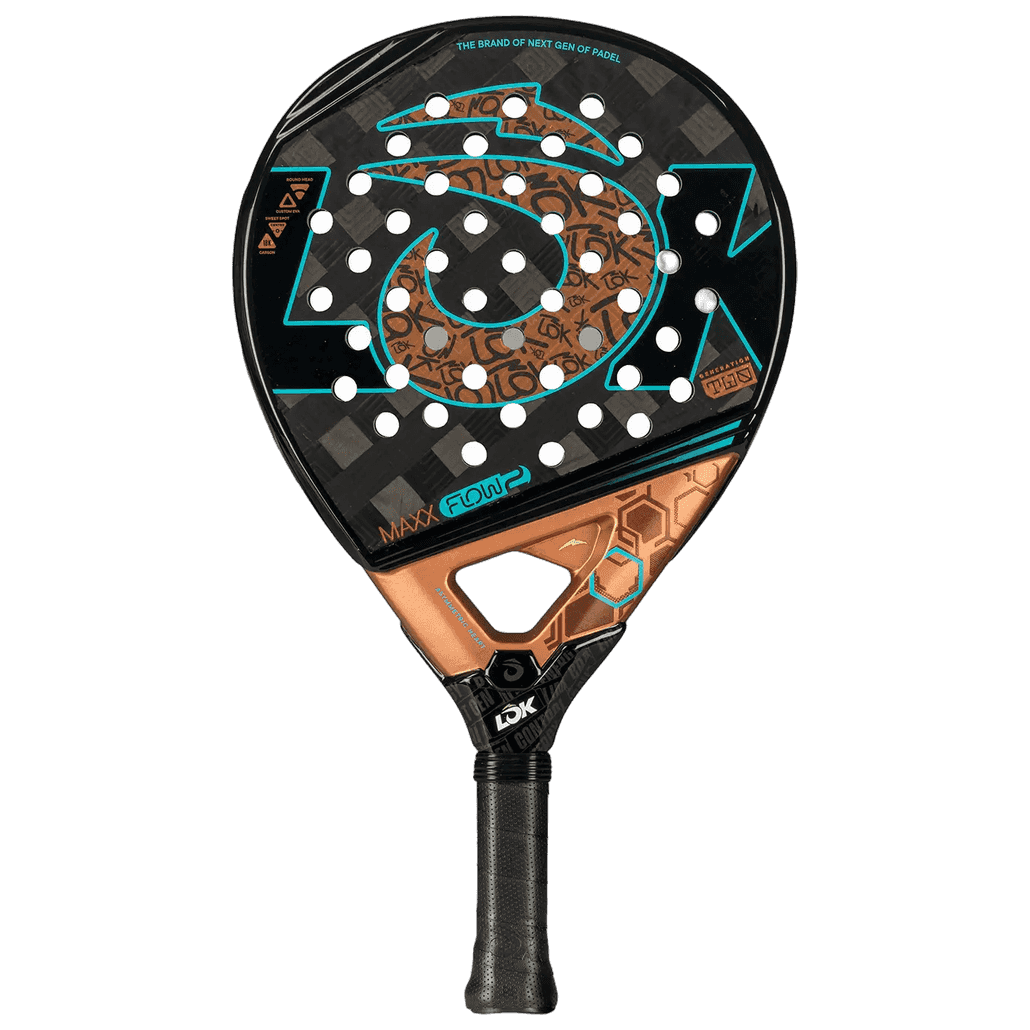
Lok Maxx Flow Gen 2 2026 is a control-first racket with a very clear personality: stable, generous on off-center hits, and more about organizing points than ending them with brute force. The round shape and medium-hard feel set the tone immediately.
I read it as a racket for players who build from the baseline, defend with patience, and want reliable behavior at the net. It doesn’t chase easy fireworks. What it does give me is order, precision, and a sweet spot that forgives more than you’d expect from a racket with this much firmness.
Technical analysis
Shape & balance
The round shape is doing a lot of work here. It keeps the racket honest in defense and makes the response feel predictable, which I value in long rallies. The balance sits in a sensible place for a control racket. It never feels top-heavy, so transitions are easier than they would be on a more attack-biased frame.
That said, the trade-off is obvious. This is not a racket that gives away free power. If you want a lazy smash or effortless finishing, you’ll have to supply more of that yourself. The racket rewards clean timing and good positioning more than raw swing speed.
Materials & construction
The fibra de carbono frame and fibra de carbono C18 faces give the racket a firm, orderly response. I get a direct connection with the ball, especially on compact swings. The EVA core sits on the medium-hard side, so the impact is crisp rather than plush.
That construction also explains the stability. When I hit slightly off-center, the racket holds its line well instead of twisting or feeling vague. The sweet spot is large enough to keep things manageable, which matters because this isn’t a soft, trampoline-like racket. Ball exit is respectable, but it stays on the controlled side.
On-court feel
Baseline play
From the baseline, this is a control tool. Defensive lobs come off with good placement, and blocks feel secure when I’m under pressure. I like it most in rallies where I need to reset the point rather than force it. It responds cleanly to compact swings, and there’s enough comfort in the frame to keep the ball inside the lines.
What it doesn’t do is rescue lazy defense. Compared with more lively rackets, I have to work a bit harder to lift the ball and generate depth. That’s the price of the precision.
At the net
At the net, the racket feels even better. Volleys are sharp and easy to direct, with enough firmness to keep the ball low and awkward for the opponent. I also trust it for quick adjustments on fast exchanges because the maneuverability is there.
The stability stands out most on exchanges close to the net. It doesn’t wobble much under pace, so I can block, redirect, and follow up without fighting the frame.
Bandeja and víbora
This is probably where the Maxx Flow Gen 2 2026 makes the most sense to me. The racket gives me a heavy, controlled bandeja with very good placement. I can work the angle, keep the ball deep, and avoid overhitting.
The víbora also comes off nicely, though it leans more toward control and bite than outright violence. If you’re looking for a racket that helps you keep the overhead game tidy and repeatable, this one fits that brief well.
Conclusion
I see this as a racket for technical players who want control, stability, and a big margin for clean contact. It suits someone who values structure in the point and likes to win with placement, pressure, and consistency.
The compromise is straightforward: the top-end power is limited, and defense asks for proper work rather than easy escapes. If you want a more explosive finish, look elsewhere. If you want a racket that stays composed, forgives mishits, and gives you real authority in volleys and overhead control, this one makes a strong case.
What other reviewers say
- Padelvofr
The review presents this racket as a control-first model with a medium-hard feel and a very generous sweet spot. It stands out at the net for precise volleys and heavy bandejas, but its top-end power trails more aggressive rackets.
- Padelreferenceen
The analysis frames it as a racket for technical players who value control, stability, and comfort, with a round shape that helps a lot on off-center hits. In return, it asks for more defensive effort and is not meant to be the most explosive option in the line.
- Padel Chiquitoes
The user-rating sheet scores it very highly for control, sweet spot size, and maneuverability, with especially strong results in defense and volley play. Ball output is more modest than the rest of the categories, which fits a racket built to organize points rather than finish them through raw power.
Switch Intelligence
Be the first to share where you switched from.
Community reviews
Real feedback from players who used this racket.
1 review

Best racket for control, lob, and voli..
Add your review
To submit your review, log in first. You can still read all approved community reviews below.
Add review


