

Lok Jungle Lite 2026
A lively diamond racket with a crisp ball exit and easy depth, though its fiberglass build keeps the power civilized.
Our Take
Shape
Diamond
Weight
360 - 375 gr
Touch
Medium-Soft
Core
EVA
Faces
Fiberglass
Frame
Fiberglass
What we like
- Lively ball exit on contact
- Easy overhead load and depth
- Comfortable net pressure and volleys
What we don't
- Off-center hits wobble more
- Needs clean timing and mechanics
- Less stable than carbon frames


Updated on 26 Oct (shipping cost not calculated)
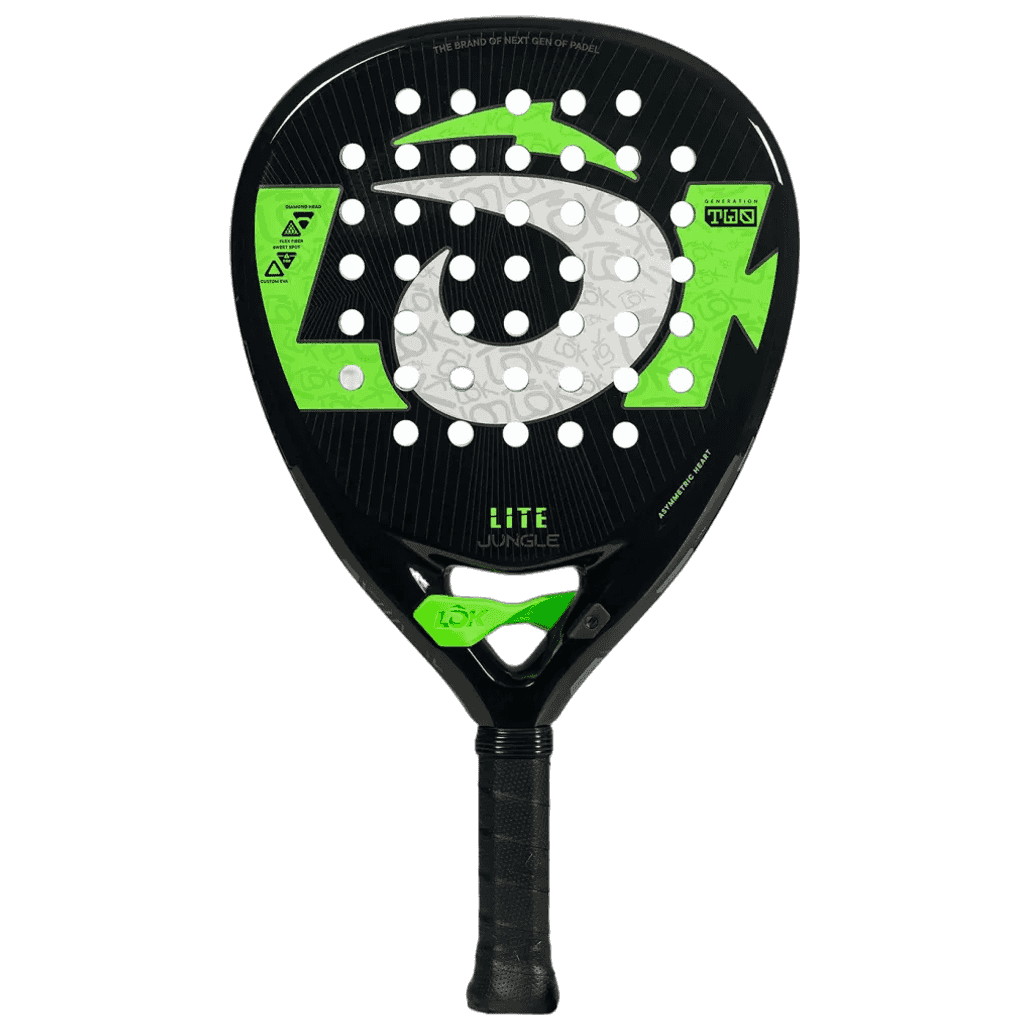
Lok Jungle Lite 2026 is a diamond-shaped racket with an attacking bias, but it doesn’t feel like a blunt weapon. I read it as a light-on-the-arm, easy-exit option for players who like to work the point from the net and finish with intent.
What stands out to me is the balance between lively rebound and usable control. It’s not trying to be a brick of carbon. It wants to help the ball come off the faces quickly, which makes it feel fresher in fast exchanges than the shape alone would suggest.
Technical analysis
Shape & balance
The diamond shape sets the tone immediately: the sweet spot sits a bit higher, and the racket naturally invites overhead work. The balance is not extreme, so it doesn’t feel like you’re swinging a hammer. That matters, because it keeps the maneuverability in a decent place for a racket built to attack.
I do think this is one of those frames that rewards clean mechanics. If your contact is late or lazy, the response can get a little messy. When you get the swing right, though, it loads the ball well and gives you enough help to pressurize points without forcing everything.
Materials & construction
The use of fiberglass on the frame and faces, paired with an EVA core, explains a lot of the behavior on court. The touch sits in a medium-soft zone, so the racket doesn’t feel stiff or dry. That softer response gives it a very lively ball exit, which is probably the first thing I noticed when hitting from both defense and attack.
The tradeoff is predictability under heavy pace. Fiberglass gives comfort and rebound, but it won’t offer the same sharp, locked-in response I’d expect from a harder carbon build. The sweet spot is usable, just not huge, so off-center hits can wobble more than some weekly players will want.
On-court feel
Baseline play
From the baseline, this racket is easier to live with than a lot of diamond frames. The ball comes off fast on blocks and defensive lobs, and that helps when you’re under pressure and just need to reset the point. I also liked how it handled low contact: it has enough rebound to lift the ball without making you overwork every defensive shot.
Still, it’s not a control-first tool. On awkward off-the-wall play, you need to stay compact and trust your hand. If you try to force precision without good timing, the racket tells on you. It’s responsive, sometimes almost too eager.
At the net
At the net is where it makes the most sense to me. Volleys come out with a clean, lively bounce, and that makes it easier to keep pressure on opponents rather than just redirecting the ball. There’s enough bite to hold your line on compact exchanges, but the real story is how quickly the ball leaves the faces.
That same rebound also makes it pleasant for quick hands battles. I wouldn’t call it laser-precise, though. If you want a very dead, surgical feel for delicate drop shots, this isn’t that racket. It prefers active hands and decisive contact.
Bandeja and víbora
On overheads, especially bandeja and víbora, the racket feels natural. The higher balance helps the swing path, and the lively core gives you a little extra pop without needing to overhit. I found it easier to keep the ball deep with moderate effort, which is useful when you’re trying to hold the net rather than gamble.
The flip side is that it won’t mask technical errors much. If your preparation is late, you lose some of that clean output quickly. It rewards rhythm more than brute force.
Conclusion
I see the Lok Jungle Lite 2026 as a comfortable attacking racket for players who want easy rebound, decent net pressure, and a lighter-feeling setup than the shape might suggest. It suits someone who likes to build points with chiquitas, volleys, and overhead placement rather than just hunting winners.
What you give up is firmness and absolute stability. It’s not the sharpest option for players who want a very direct, carbon-like response, and it won’t feel as secure on mishits as more demanding rackets. But if you value ball exit and a friendly, lively touch, it has a clear identity.
Switch Intelligence
Be the first to share where you switched from.
Community reviews
Real feedback from players who used this racket.
Add your review
To submit your review, log in first. You can still read all approved community reviews below.
Add review


