

Kombat Fuji 2.5 by Manu Martin 2026
A composed tear-shape racket with easy maneuverability, clean control from the back of the court, and enough bite to stay sharp at the net.
Our Take
Shape
Tear
Weight
360 - 370 gr
Touch
Medium
Core
Red EVA
Faces
18K carbon
Frame
Carbon fiber
What we like
- Baseline control and depth
- Easy handling in transitions
- Reliable *bandeja* and *víbora*
What we don't
- Not built for violent smashes
- Needs clean contact under pressure
- Less forgiving for soft-racket users
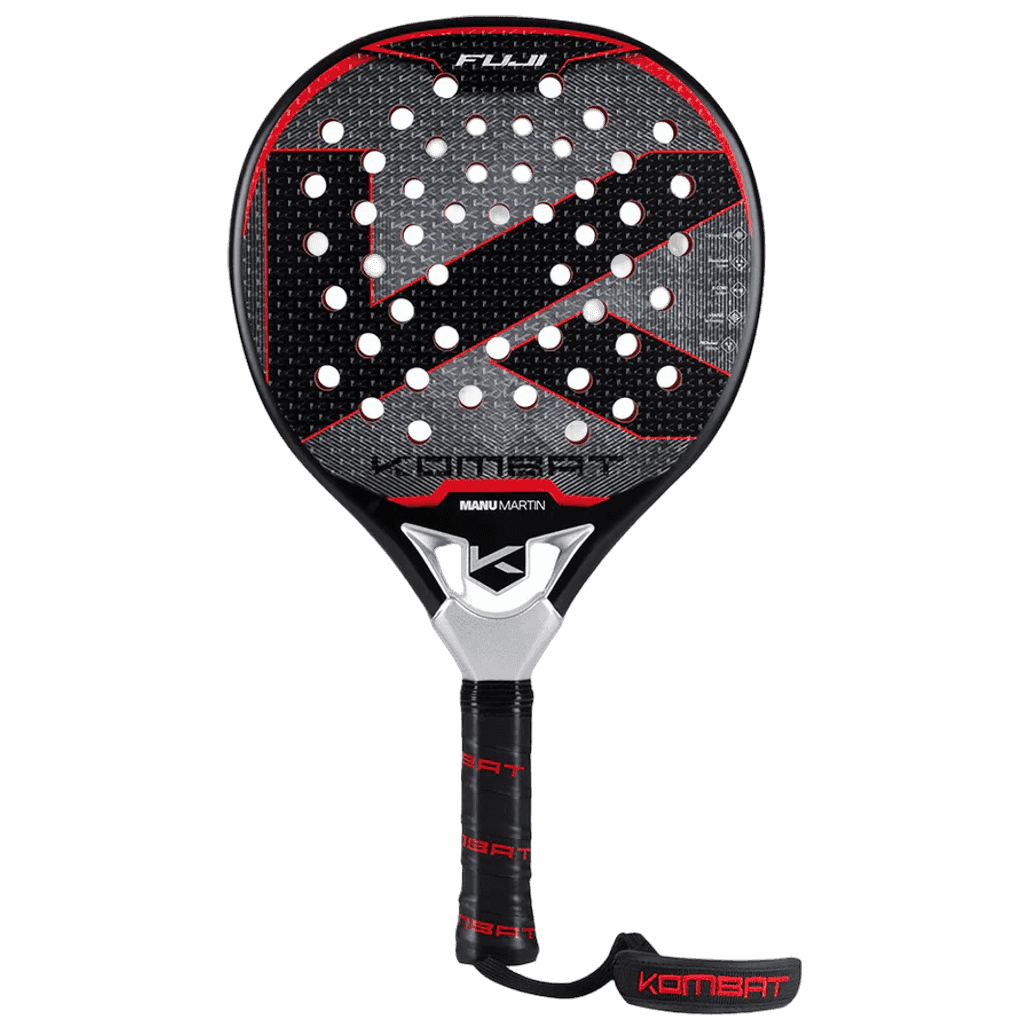
Kombat Fuji 2.5 by Manu Martin 2026 is a control-first racket with enough punch to stay honest at the net. I see it as a well-rounded option for players who want order from the baseline, easy handling through transitions, and a response that feels clean rather than explosive.
It does a lot of things neatly, but it does not chase brute force. If your game lives and dies by violent smashes, this is not the racket that will bail you out every time. What it gives you instead is balance, stability, and a very workable feel in all the middle gears of a point.
Technical analysis
Shape & balance
The tear shape gives this racket its character right away. It sits in that middle lane where you get useful attacking help without losing the compact response you want in defense. The balance feels sensible, not sky-high, so it never feels like you are swinging a club.
That matters in real points. I found the racket easy to move on quick exchanges, especially when reacting late at the net or after a wall rebound. It is not ultra-fast in the hand, but it is stable enough to inspire confidence when you have to block or redirect with little time.
Materials & construction
The fiberglass frame and 18K carbon faces set up a fairly crisp response, while the Red EVA core keeps the feel in the medium zone. The result is a racket with decent ball exit, but not a trampoline effect. It gives you feedback. You feel where the ball is going.
That construction also helps explain why it feels so composed on contact. The sweet spot is usable rather than tiny, and the response stays predictable across a good part of the face. I would not call it soft, though. Players used to very forgiving cores may need a few sessions to sync with it.
On-court feel
Baseline play
From the baseline, this is where the Fuji 2.5 earns its keep. Defensive lobs come out with good depth, and blocks stay tidy if you keep your technique compact. It is comfortable in off-the-wall play too, with enough stability to keep the ball from flying off in awkward moments.
The ball exit is reliable, not lazy. When I was under pressure, I could reset points without having to force the swing. That said, it does ask for a reasonably clean contact. If you get rushed and start reaching, the response becomes less generous.
At the net
Up by the net, it feels secure on volleys. The racket lets you absorb and redirect without much drama, which is useful when the pace rises. I also liked it on chiquitas and quick hands exchanges, where maneuverability matters more than raw weight through the shot.
What it does not give you is that heavy, crushing sensation some attacking rackets provide. If you want to overwhelm people with pace alone, you may find it a touch restrained. It works better by keeping the point organized and letting you win the exchange through placement.
Bandeja and víbora
This is probably its most natural attacking lane. The racket handles bandeja and víbora with good control and enough bite to keep the ball uncomfortable. I felt comfortable holding the net and playing with margin, rather than forcing every overhead into a winner.
It is not a fireworks racket on overheads. The upside is that the timing window feels manageable and the shot shape stays clear. That makes it easier to repeat good contacts across a match, even when your legs are starting to go.
Conclusion
I’d point this racket toward players who value court sense, maneuverability, and a controlled attack more than raw finishing power. It has a very usable all-court personality, with the strongest arguments coming from defense, volley control, and overhead placement.
The trade-off is straightforward: you give up some smash aggression and some immediate comfort if you are coming from a softer or more elastic racket. But if you want a composed, balanced frame that lets you build points without fighting the equipment, this one makes a lot of sense.
What other reviewers say
- PadelReviewes
The review frames it as a very balanced racket, with clear control from the back of the court and solid behavior at the net. It stands out for maneuverability and reliable ball output, but it is not portrayed as a maximum-power weapon for very aggressive smashes.
Switch Intelligence
Be the first to share where you switched from.
Community reviews
Real feedback from players who used this racket.
Add your review
To submit your review, log in first. You can still read all approved community reviews below.
Add review


