

Kombat Etna 2.5 by Manu Martin 2026
A hard-edged diamond racket built for heavy smashes and sharp net play, while asking for cleaner technique once the rally turns defensive.
Our Take
Shape
Diamond
Weight
350 - 370 gr
Touch
Hard
Core
Black EVA Pro
Faces
12K Carbon
Frame
Carbon fiber
What we like
- Smash power and leverage
- Strong volleys at net
- Clean *bandeja* and *víbora*
What we don't
- Defense needs quick preparation
- Low balls lack easy exit
- Forgiveness limited on mishits
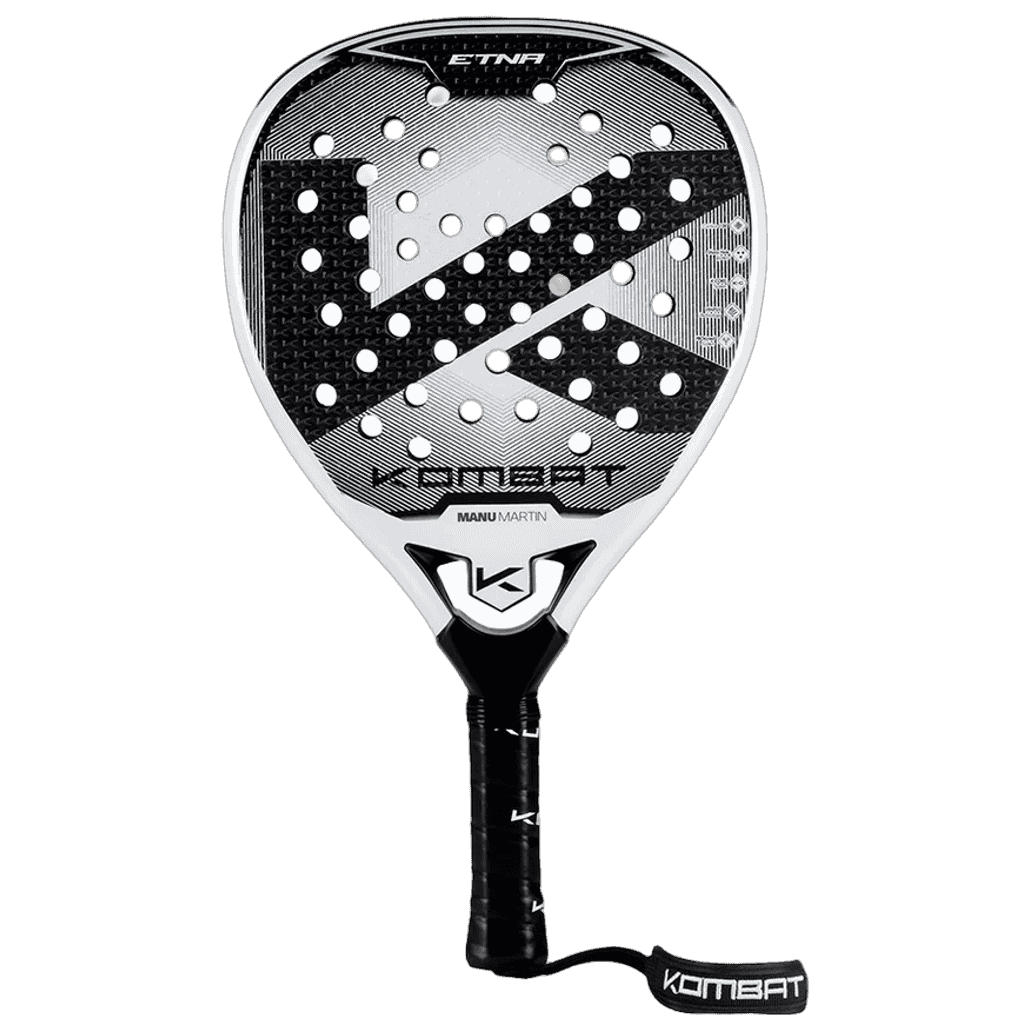
Kombat Etna 2.5 by Manu Martin 2026 is an attack-first racket with a hard, direct personality. I feel it immediately in the hand and even more once the point speeds up: this is built for players who want to hurt the ball at the net and finish.
The diamond shape and the head-heavy balance push it firmly toward offense. It does give me decent order on contact, but it does not hide its priorities. If you want easy defense and a soft, elastic response, this is not that racket.
Technical analysis
Shape & balance
The diamond format does most of the talking here. It loads the upper part of the racket and that shows in how it behaves on high balls and attacking shots. I get a clear sense of leverage on overheads, and that translates into real help when I want to speed the point up.
That same balance, though, is part of the compromise. In quick defensive exchanges, especially when I am late or stretched, it asks for cleaner preparation. It rewards a committed swing, not lazy hands. This is a racket that wants me to take initiative.
Materials & construction
The fiberglass frame and 12K carbon faces give it a firm, fairly crisp response. The touch is clearly hard, and the Black EVA Pro core keeps the ball from sitting on the faces too long. That works well for attacking contact because the racket sends the ball back with a direct feel and good bite.
What I do not get here is effortless rebound. The ball exit is controlled rather than lively, so defensive resets and low balls demand more input from me. There is also a bit less forgiveness than I would want if I were looking for an easier all-court racket. The sweet spot is decent, but it is not especially generous for off-center contact.
On-court feel
Baseline play
From the back of the court, this racket can feel demanding. Blocks need to be firm and well timed, otherwise the hard construction makes the ball come off flatter than I want. On defensive lobs, I have to work a little harder to get depth.
In fast exchanges, I notice that the racket prefers a prepared swing and good hand speed. If I am under pressure, it does not help much by itself. If my technique is on point, though, it stays stable enough and gives me a clean, honest response.
At the net
This is where the Etna 2.5 makes the most sense. Volleys come off with a strong, solid punch, and I can pressurize opponents without the racket wobbling in my hand. There is good weight behind the ball, especially when I take the volley early.
The hard feel also helps in touch shots near the net. It is not plush, but it is precise. I like it more for active net play than for passive blocking, because it rewards intent and timing.
Bandeja and víbora
On bandeja and víbora, I get a clean, aggressive response. The racket helps me keep the ball low and fast, with enough bite to make the shot uncomfortable for the opponents. It feels natural when I’m looking to keep pressure on and follow the ball forward.
The flip side is that these shots need proper preparation. If I rush the motion, the hard touch can work against me and the ball can stay a little too short. When I set it up well, the result is strong and very playable.
Smash
Smashing is clearly this racket’s best argument. It gives me a lot of confidence to go for power, and the structure really suits committed overhead hitting. The ball leaves with real speed, and I do not have to force the racket to produce offense.
It is not the easiest option for casual finishing. It wants clean technique and a full swing. But if that is already part of your game, the payoff is there.
Conclusion
I see the Kombat Etna 2.5 by Manu Martin 2026 as a serious attacking racket for players who spend a lot of time at the net and like to end points with overheads. It feels firm, direct, and very much built around power-first padel.
What you trade off is comfort in defense. It is not forgiving in quick exchanges from the back court, and it will expose sloppy timing. If your game is based on pressure, volleys, bandeja, and finishing, it makes a lot of sense. If you want easy ball exit and a softer ride, I would keep looking.
What other reviewers say
- Padelfulen
The racket is described as clearly attack-first: it shines on smashes, volleys, and fast net exchanges thanks to its hard feel and high balance. In defense, it asks for better technique and quicker hands because it is not especially easy or forgiving.
- Padelfules
The racket is presented as a clearly offensive option, with strong help at the net and on smashes thanks to its hard feel and diamond shape. From the back court it demands more preparation and does not feel friendly in defense, especially in fast exchanges.
Switch Intelligence
Be the first to share where you switched from.
Community reviews
Real feedback from players who used this racket.
Add your review
To submit your review, log in first. You can still read all approved community reviews below.
Add review


