

Joma Valkiria Flex 2026
A soft, quick round racket that keeps the ball moving from defense, trading finishing punch for easy depth and calm placement.
Our Take
Shape
Round
Weight
350 - 360 gr
Touch
Soft
Core
EVA FLEXO BlackEVA Soft
Faces
FlexSHIELD (fiberglass and carbon)
Frame
EXO COUNTER Carbon
What we like
- Broad sweet spot on defense
- Easy ball exit from baseline
- Quick hands for *bandejas*
What we don't
- Limited smash finishing power
- Passive blocks lack depth
- Muted feedback on impact


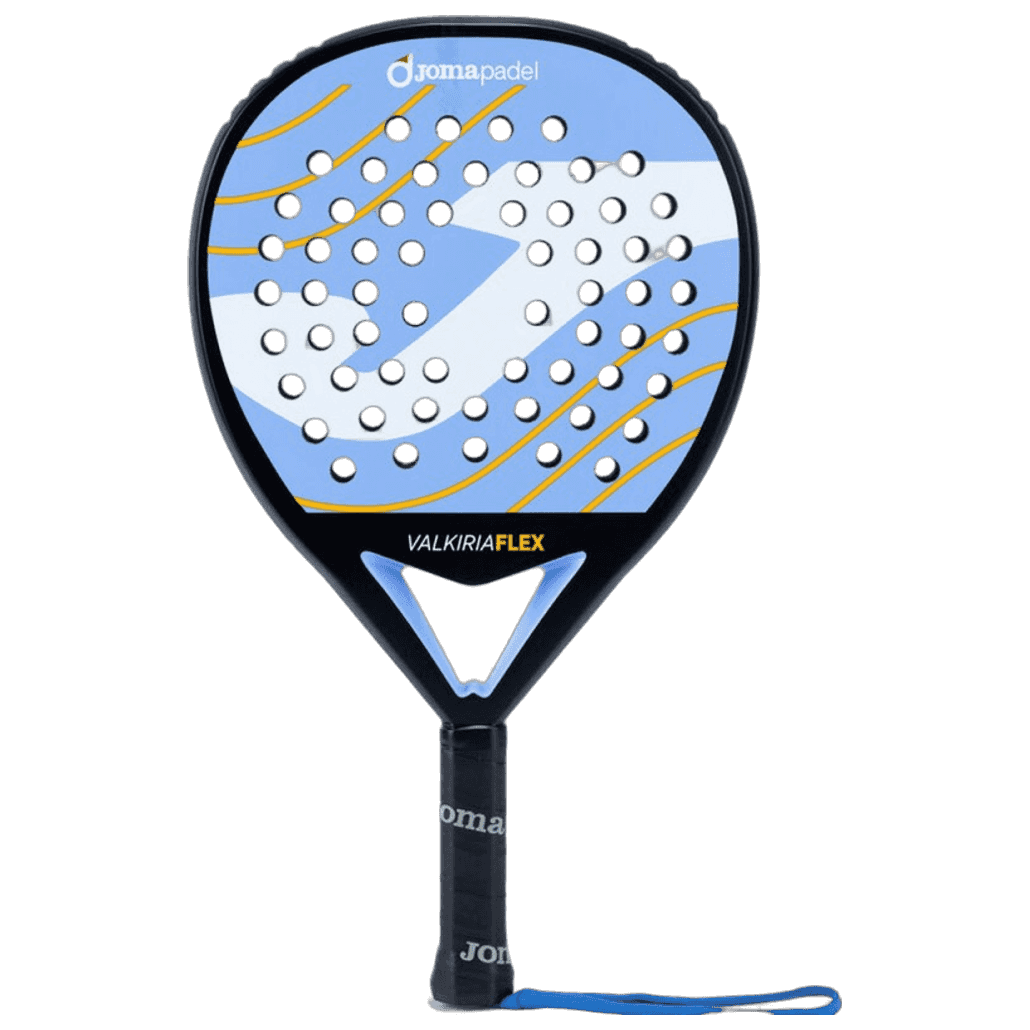
Joma Valkiria Flex 2026 is a comfort-first racket with a very clear job: make defense, placement, and quick exchanges easier without punishing imperfect contact. It feels forgiving rather than forceful.
I see it fitting newer players and regular intermediates who build points with patience. It gives you help from the baseline, but it will not supply the finishing power for you.
Technical analysis
Shape & balance
The round shape puts a large, accessible hitting area in front of the hand. Its sweet spot is broad, and that is the main reason the racket feels so cooperative on rushed balls. Contact toward the throat or slightly off-center still tends to hold direction and produce usable depth.
The balance is low enough to keep the head moving quickly. I found that useful when reacting late off the wall or changing from defense to a short volley. The trade-off is clear: there is not much mass waiting behind the ball. Against fast attacking shots, the racket can get pushed back unless I block with a firm hand and good body position.
Materials & construction
Joma uses an EXO COUNTER Carbon frame, FlexSHIELD faces made from fiberglass and carbon, and an EVA FLEXO BlackEVA Soft core. The result is a soft feel with noticeable damping. It absorbs vibration well and does not punish the arm during longer sessions.
Ball exit is easy, especially at lower swing speeds. I do not need to force the stroke to get a defensive lob deep enough or to move the ball through the court on a controlled drive. That softness also makes the response less crisp than a firmer carbon racket. Players who like immediate, sharp feedback at impact may find it slightly muted.
On-court feel
Baseline play
From the baseline, this is where the Valkiria Flex makes the most sense. It helps me defend with compact swings, particularly on balls that arrive low or after an awkward rebound. The racket gets the ball moving without demanding a big acceleration, and its broad sweet spot gives me more margin when I am stretched.
Placement is predictable on drives and sliced shots. I can play a controlled low-driven lob or reset with a higher defensive lob without feeling that the racket suddenly launches the ball. Still, it is not a racket for hitting through opponents from deep in the court. I have to construct the point rather than try to end it early.
At the net
Quick hands are a strong point. The head comes around easily in reflex volleys, short blocks, and small directional changes. I also like the comfort on touch shots: a drop shot or chiquita can be played with a relaxed hand rather than a hard stab.
Against heavy volleys or a very fast smash, though, the low inertia shows up. A passive block can fall short, and I need to add my own firmness to keep the ball deep. It is agile at the net, not especially imposing.
Bandeja and víbora
The maneuverability helps me prepare early for a bandeja, and the soft response makes it easy to prioritize height and placement over raw pace. I can guide the ball toward the fence or play safely through the middle without fighting the racket.
A more aggressive víbora is less natural. It will spin and travel, but it does not produce the penetrating, heavy ball that a firmer and more head-heavy racket can generate.
Conclusion
I would buy this racket for comfort, forgiveness, and uncomplicated control. It suits players who spend plenty of time defending, value easy ball exit, and want a racket that stays manageable during fast exchanges.
The trade-off is attacking authority. The Valkiria Flex will help me play clean padel, but it does not reward a big smash with much extra damage. As my game becomes more aggressive and I start looking for heavier volleys and stronger overheads, I would likely want a firmer, more head-heavy option.
What other reviewers say
- Top Padel Racketsnl
This review finds a soft, damped feel with predictable placement on drives and sliced shots. Its broad sweet spot preserves usable direction on off-centre contact and it moves quickly in defence and net reflex exchanges, but players must generate the power themselves on smashes.
- PadelTestLaben
PadelTestLab particularly praises its easy ball exit, agility and defensive forgiveness: even strikes near the throat retain depth and direction. Maneuverability helps on bandejas and short volleys, while blocks against very fast balls and flat smashes come up short because there is little head inertia.
- Padel Racket Reviewses
The assessment presents it as a light, comfortable racket that puts forgiveness and ease of use ahead of punch. It also reports a muted feel and less crisp feedback than ambitious intermediate players may want, so it may be outgrown as technique develops.
Switch Intelligence
Be the first to share where you switched from.
Community reviews
Real feedback from players who used this racket.
Add your review
To submit your review, log in first. You can still read all approved community reviews below.
Add review


