

Bullpadel Neuron 02 Edge 2027
Hard-faced and precise, this diamond racket keeps the point organized from the baseline, then puts real weight behind the finish.
Our Take
The Court
1 reviewShape
Diamond
Weight
365 - 375 gr
Touch
Hard
Core
MultiEVA
Faces
X-Tend Carbon 3K
Frame
Carbon
What we like
- Precise compact volley response
- Quick handling during net exchanges
- Penetrating *víbora* with acceleration
What we don't
- Limited ball exit under pressure
- Harsh on off-center overheads
- Demanding late defensive contacts


Updated on 26 Oct (shipping cost not calculated)


Updated on 26 Oct (shipping cost not calculated)
Are you a store owner? Join our platform to be featured here.
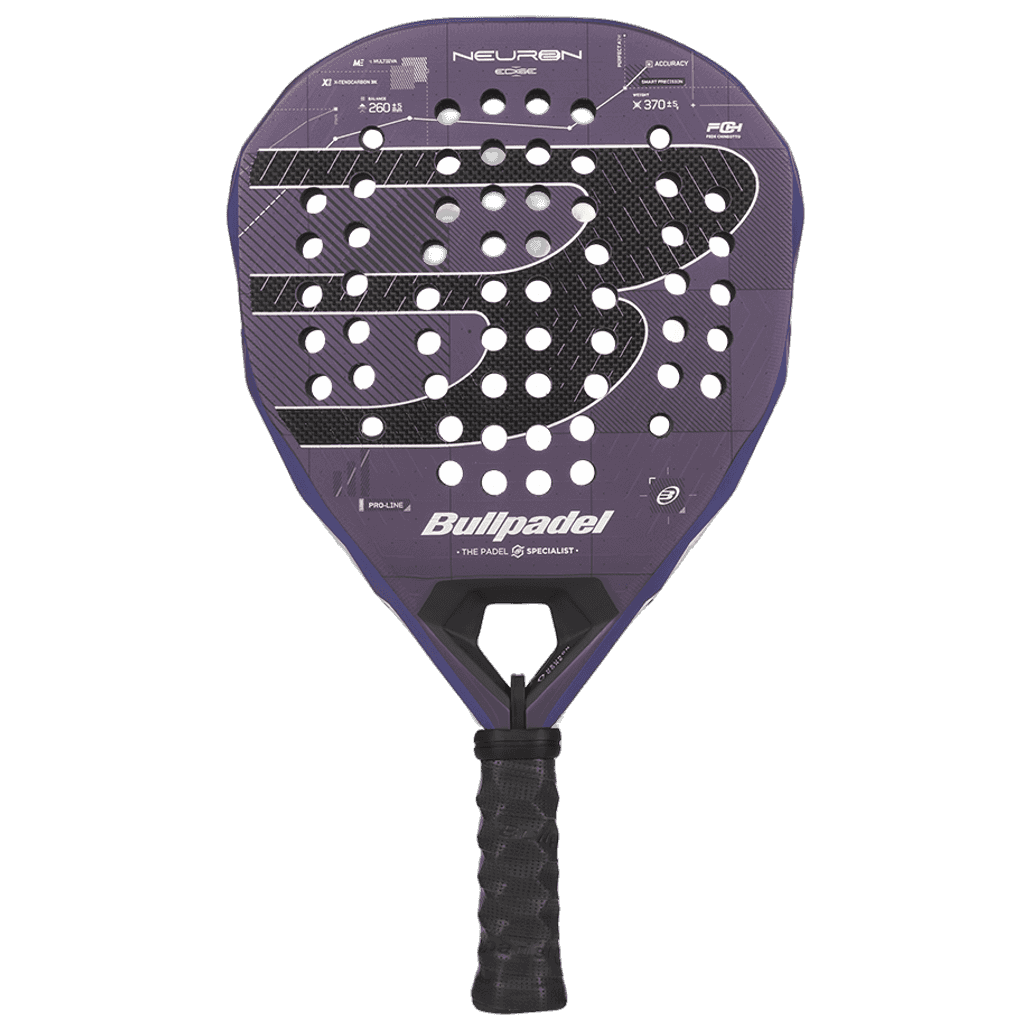
The Bullpadel Neuron 02 Edge 2027 is a control-first attacking racket. Its diamond shape and hard feel give it a sharp, deliberate response rather than easy ball exit, so it rewards players who prepare early and hit with purpose.
I see it fitting advanced players who build points from the net and want a racket that stays precise when the pace rises. It is not a forgiving option for passive defense or late contact.
Technical analysis
Shape & balance
Despite the diamond profile, this does not read like a wild, head-heavy power racket. The balance appears managed well enough to keep the racket quick through compact volleys and fast changes of direction, while the upper part of the face still gives overhead shots some extra authority.
That combination matters in real points. I can accelerate a víbora or punch a volley without feeling that the head drags behind my hand. The trade-off is clear, though: contact outside the central hitting area loses some of that clean, controlled response. It does not hide poor timing.
Materials & construction
The Carbon frame, X-Tend Carbon 3K faces, and MultiEVA core point toward a firm, stable construction. The 3K carbon should keep the touch relatively direct rather than overly stiff and brittle, while the MultiEVA layout is there to provide some progression between softer defensive contact and harder attacking acceleration.
In practice, I would expect a compact impact with limited trampoline effect. That helps with placement, blocks, and taking speed off the ball, but players who rely on the racket to lift slow balls from deep may find it demanding. You need to supply the swing; this racket is not doing the work for you.
On-court feel
Baseline play
From the baseline, the Neuron 02 Edge feels built for organized defense rather than survival mode. A firm face helps me direct blocks and low-driven lobs with confidence, especially when I can meet the ball in front. Off-the-wall play should be accurate once the timing is settled, with enough structure to keep defensive returns from floating.
The weaker side is easy to predict: ball exit is not generous. On rushed shots, particularly when the ball drops low near the back glass, I would need a more active wrist and cleaner leg drive than with a softer racket. Beginners and intermediate players who often defend late may find it unnecessarily demanding.
At the net
This is where the racket’s identity makes most sense. Quick hands, a fairly maneuverable build, and a hard response should make it strong in volley exchanges. I would use it to play firm volleys into the middle, absorb pace with a short block, or add direction without overhitting.
There is also enough firmness for a controlled chiquita when moving forward, although touch shots require a relaxed hand. The racket will not soften the ball for you if you grip too tightly.
Bandeja and víbora
The controlled response should suit players who use the overhead to hold the net rather than chase a winner every time. A bandeja can be driven deep with a compact swing, while the diamond geometry gives the víbora enough penetration when I accelerate through contact.
It is less friendly for casual, arm-only overheads. Miss the sweet spot and the feel will turn noticeably harsher.
Conclusion
I would choose the Neuron 02 Edge 2027 for an advanced player who values precision, fast net work, and disciplined overheads more than automatic ball exit. It has offensive intent, but the appeal is controlled pressure rather than brute-force smashing.
The trade-off is comfort. Defensive recovery shots, late contacts, and slow balls need active technique. Players wanting a softer, more forgiving racket should look elsewhere; this one asks for clean padel and gives a very direct answer back.
Switch Intelligence
Be the first to share where you switched from.
Community reviews
Real feedback from players who used this racket.
1 review

Add your review
To submit your review, log in first. You can still read all approved community reviews below.
Add review


